Our Trip to Madagascar
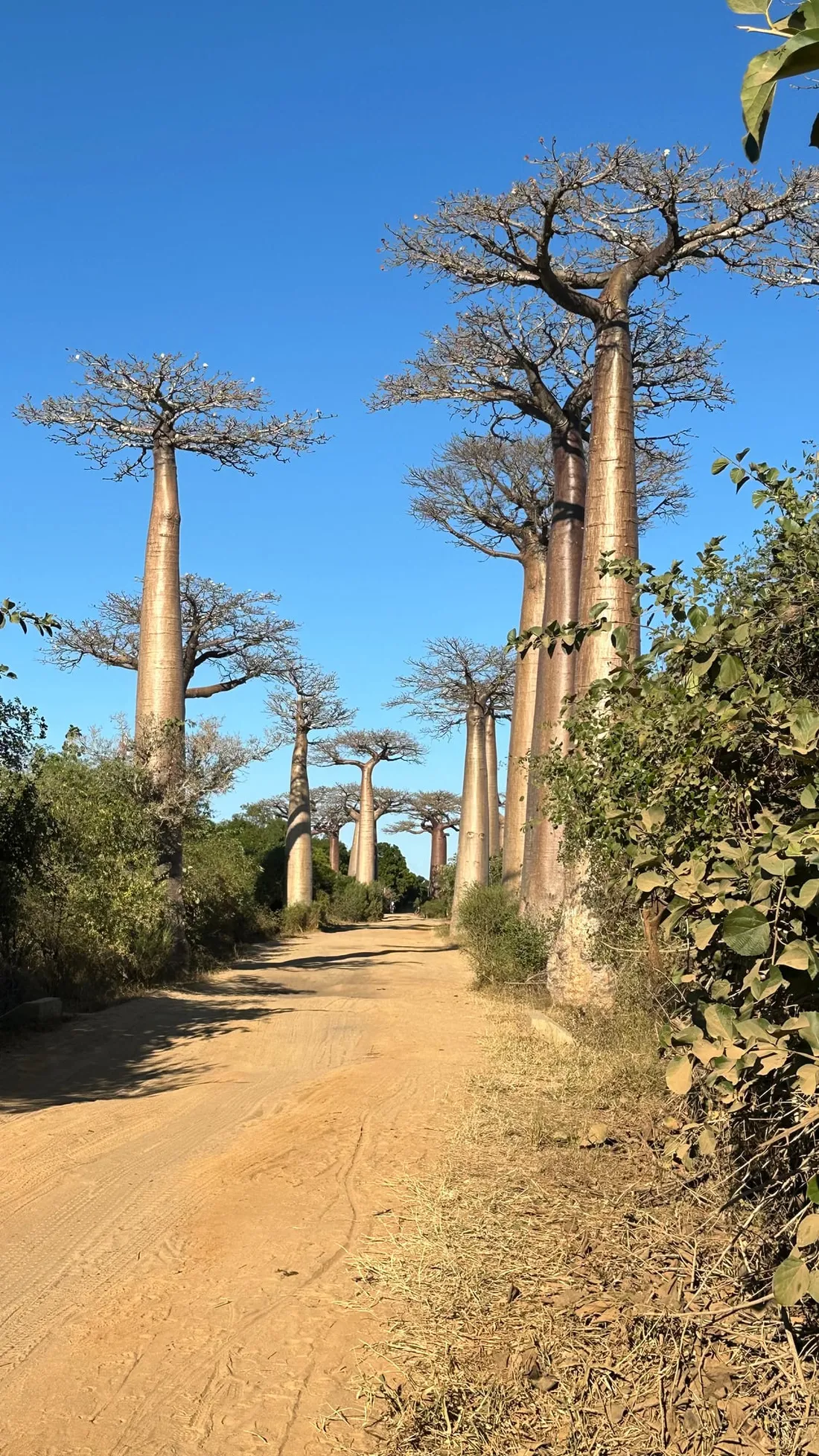
Madagascar. Wow.
Once we’d more or less finished all the wedding preparations, we started thinking about a honeymoon. One constraint or another led us to pick June for our trip. Lots of countries were suggested and ruled out, three made the shortlist, and none of them was Madagascar.
We wanted a mix of nature – animals, plants and landscapes – and culture. We also wanted a place that would let us experience something different: a bit of adventure, but also a chance to end up on some beach sipping a piña colada out of a coconut shell and reading a book by the pool. One thing led to another, and while I was cutting open a vanilla pod I caught myself wondering where the best place to buy them would be, and about ten minutes later I was googling vanilla shops in Madagascar from scratch. From there it was a short hop to Instagram and Wikipedia. Photos of dozens of kinds of lemurs, baobab trees, deserts and gorgeous beaches. Stories about a culture that blends Indonesian and African roots, and about an island that apparently broke away from India (yes, India, not Africa – shocking!) tens of millions of years ago, which led to the evolution of wildlife and plants that are unique (endemic) to Madagascar alone – the lemurs, of course, first and foremost.
Two days later we’d already booked our flights.
A few “dry” facts
Madagascar is actually an island nation. It’s the fourth-largest island in the world (after Greenland, Borneo and New Guinea).
About 90% of the island’s animals are endemic to it.
The main language spoken on the island is Malagasy, followed by French.
Madagascar was a French colony and gained its independence from France in June 1960.
The first settlers to reach Madagascar were most likely Austronesian peoples (among them Indonesians and Malays) who came from Borneo in Asia. Later, settlers arrived from mainland Africa as well, and so a culture formed there that blends the East with Africa.
The East Asian (mainly Indonesian) influences are still very much felt today – for example, the island’s main crop is rice, and Malagasy cuisine is built entirely around rice.
Most of Madagascar’s population works in agriculture. Among the island’s main crops, besides the rice I mentioned, you’ll find peanuts, cocoa, cloves and, of course, vanilla – which, by the way, originally comes from Mexico. The Malagasy grow about 70% of the world’s vanilla.
Madagascar is an amazing country. It’s extraordinarily beautiful and has a bit of everything: smiling, welcoming people; kids who wave hello to you at every opportunity; chameleons, lizards and frogs in colors and shapes beyond imagination; beaches that look like they came straight out of a screensaver – and that’s before I’ve even mentioned the African sunsets and the night skies flooded with stars. At the same time, it’s also a tough country. Inflation is sky-high and most of the island’s population is extremely poor, which confronts travelers with difficult sights and experiences and makes you think about things we often take for granted.
Flying to Madagascar? My best advice is to bring clothes you don’t need (children’s clothes are especially in demand), notebooks and pens, maybe a few small games that pack easily – basically anything useful that comes to mind. Along the way you’ll pass lots of small villages; the villagers will be happy to receive whatever you’ve brought, and you’ll get a fascinating walk through the village, a chance to meet the locals and learn about their lives, and lots and lots of new friends for the moment :)
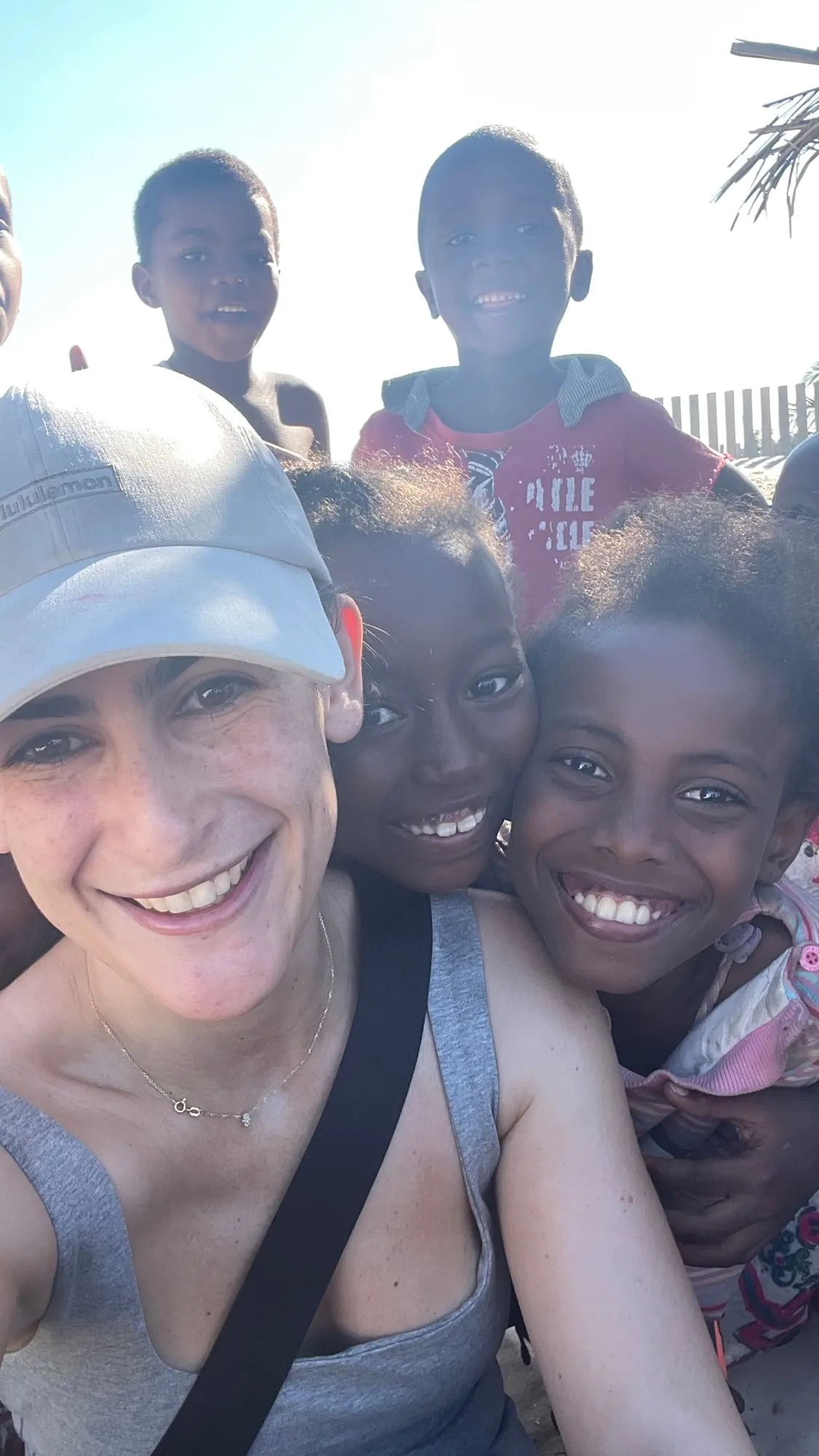
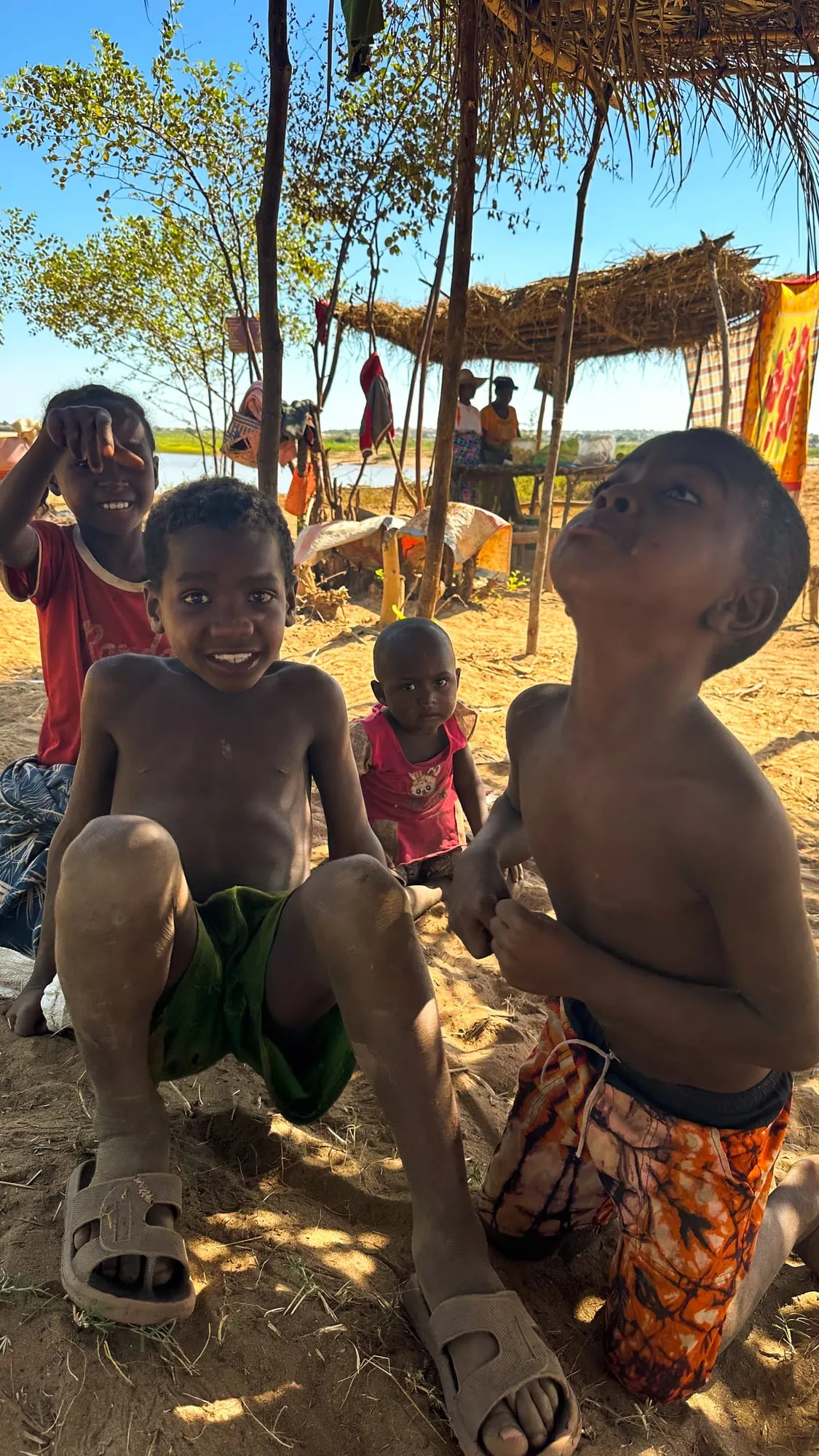
One more important thing to know before you pack your bags: Madagascar is a huge country! And as big as it is, the infrastructure and roads are just as bad. Getting from place to place takes a long time; sometimes the roads aren’t paved, and sometimes they’re just full of potholes. Sometimes a truck blocks the road, and sometimes a domestic flight won’t leave today because someone else needs the plane. It’s important to arrive knowing and accepting that everything that goes wrong goes wrong for the best.
The locals call it mora mora (slowly, slowly).
Worth packing:
- Comfortable walking shoes – waterproof is even better.
- A raincoat – in the east, some of the reserves are rainforests.
- Sunscreen – important! A must! Don’t forget it, and bring more than one if you can; keep them in different places in your bag in case one gets lost. Sunscreen is very hard to find in Madagascar.
- Mosquito repellent – need I say more.
Our itinerary (three weeks):
Our trip can be divided into a few parts:
-
Days 2–5: eastern Madagascar, from Tana (Antananarivo) to Toamasina (Tamatave), and from there a flight back to Tana. This part includes private and national reserves and lots of lemurs that usually aren’t the least bit shy about coming close to visitors.
-
Days 6–9: western Madagascar – Morondava and the Tsingy (Tsingy de Bemaraha). We flew from Tana to Morondava, and from there drove to the Tsingy and back to Morondava. This part includes the famous Avenue of the Baobabs, Morondava itself – a wonderful beach town – and of course the Tsingy.
-
Days 10–18: central to southwestern Madagascar. The RN7 heading south from Antsirabe to Toliara. The road is actually a national road; it starts in Tana and ends in Toliara. We chose to drive from Morondava to Antsirabe (days 10–11 of the trip) and start the road from Antsirabe. Of course, you can also fly from Morondava to Tana and start in Tana. This part includes, among other places, Antsirabe, Ranomafana and Isalo. We finished it with two days in Ifaty and then flew back to Tana from Toliara.
-
Days 19–23: Nosy Be.
Day 1: Tel Aviv – Antananarivo
We flew via Addis Ababa to Antananarivo – Tana for short – Madagascar’s capital and the largest city in the country. At 13:40 we landed at Ivato International Airport. At the airport we sorted out our visas, at a cost of 35 euros per person for 30 days (you can also get the visa in advance through the website – for us, the process at the airport was pretty quick). We went through passport control and headed out to meet Fabrice, our guide for the next two and a half weeks.
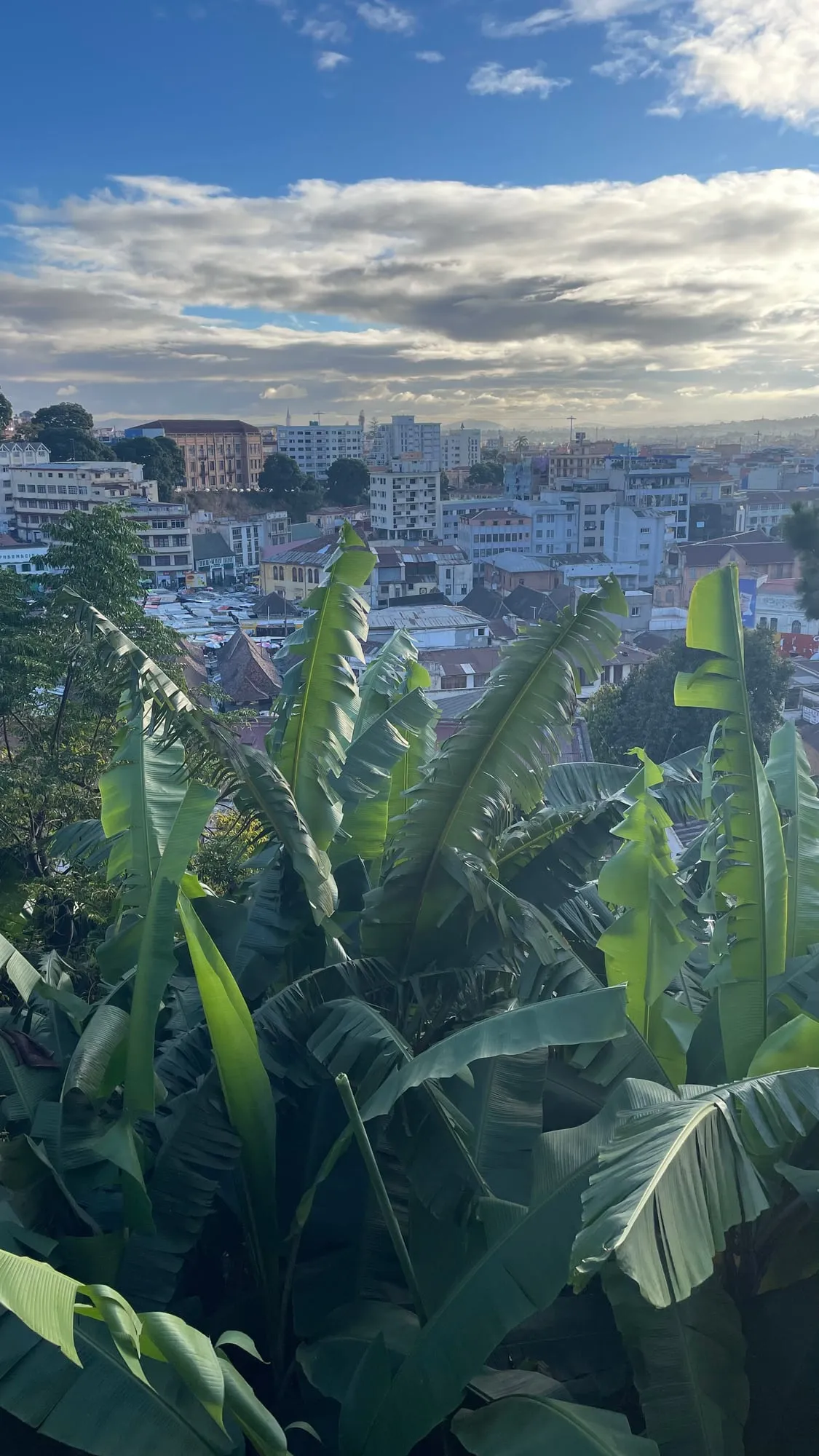
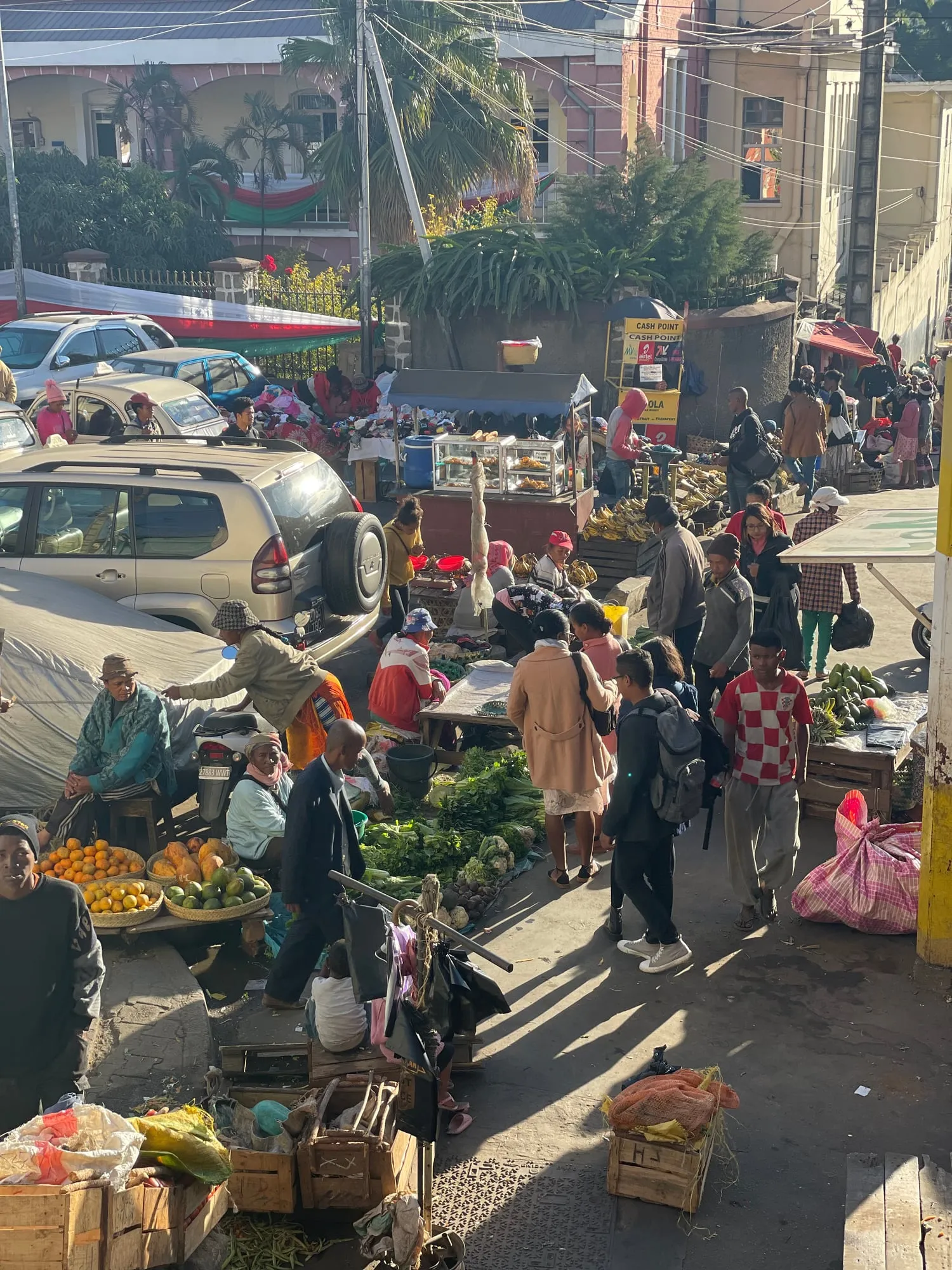
Fabrice, together with the driver who accompanied us for the first part of the trip, was waiting for us at the airport, and the four of us set off for the city. Along the road stretched rice paddies, cows and zebu too (the local cattle – or, crossword fans, the four-letter sacred animal that isn’t a cow). We kept driving to the city center toward the hotel; on the way we passed Analakely (maybe the busiest area in the city) and went straight to our first hotel, Maison d’Hôtes Mandrosoa. The hotel is in a great location, on a quiet side street off the city center, and well lit in the evening!
At the hotel, together with our guide, we briefly went over our itinerary, which we’d planned meticulously for almost six months. Afterwards we went to withdraw local cash, for ourselves and to pay the guide (we’d paid in advance for the whole trip). We also considered stopping at the supermarket (Tana has a relatively large Carrefour – which turned out to be pretty rare for the rest of the trip), but decided there was no need for now. We’d been warned in advance that the food in Madagascar isn’t anything to write home about, so we’d stocked up on loads of energy bars and snacks from home.
We went on to an early dinner at the restaurant of the Palissandre hotel. (Instead, I recommend Le Petit Verdot, which we discovered later and even declared the best restaurant of our trip – a short walk from the hotel.) We went back to the hotel and collapsed into bed after an especially exhausting day of flights.
Hotel: Maison d'Hôtes Mandrosoa
Day 2: Tana – Andasibe
After a quick breakfast at the hotel, we drove east toward Andasibe.
A quick moment of order and organization: around Andasibe there are several reserves – rainforests, really – among them two national parks, Andasibe (Andasibe-Mantadia NP) and Analamazoatra, and the private reserve of Vakona.
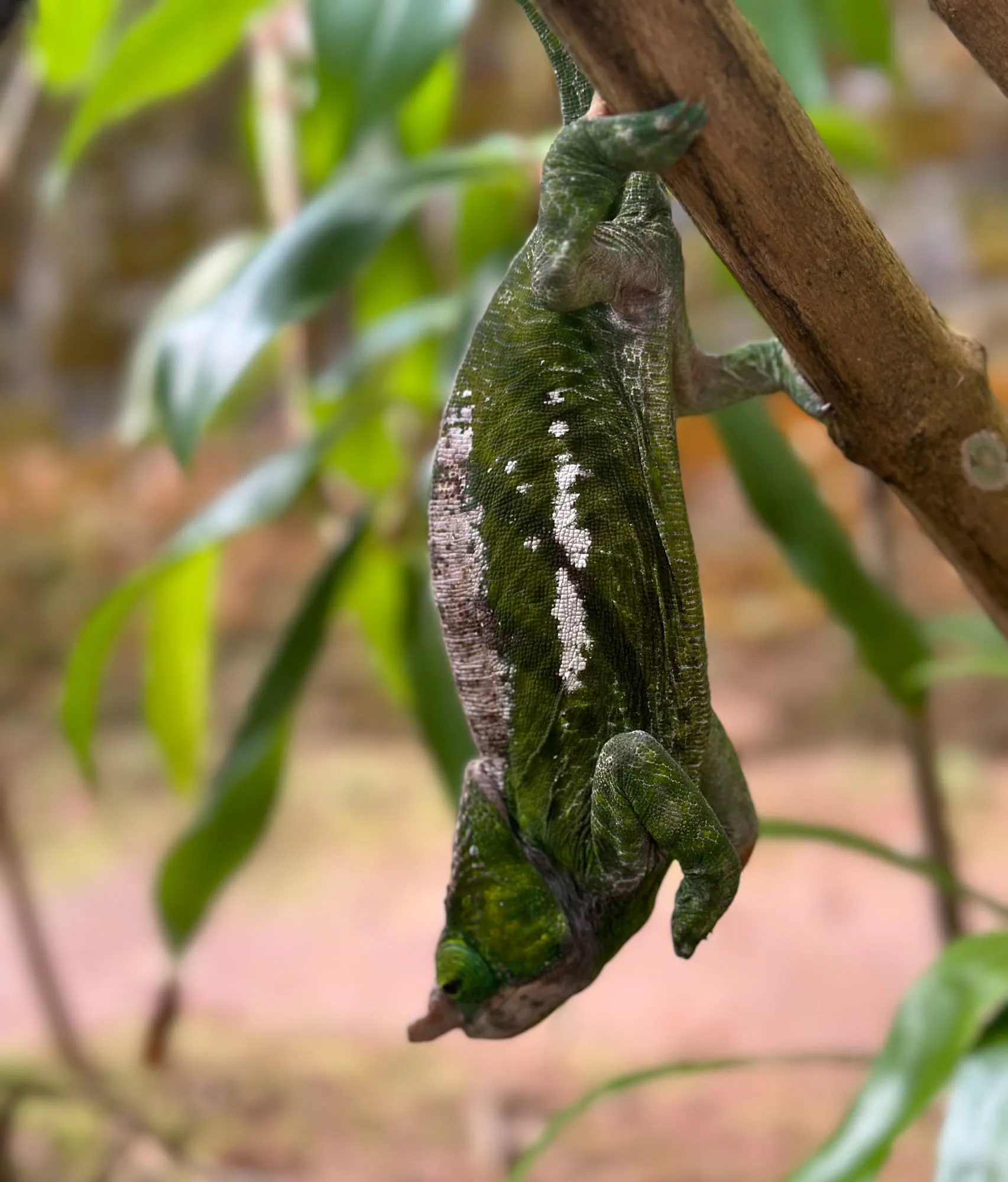
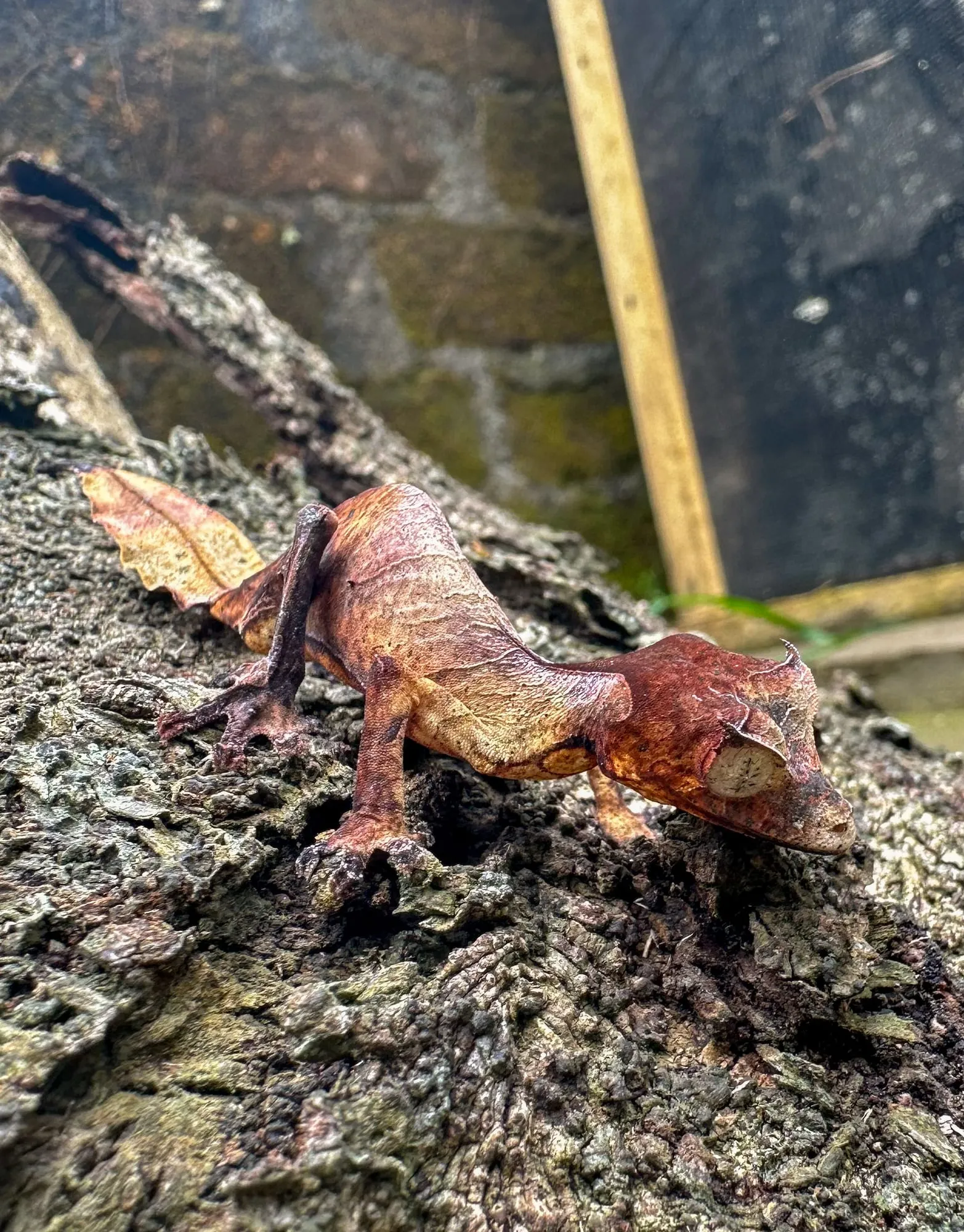
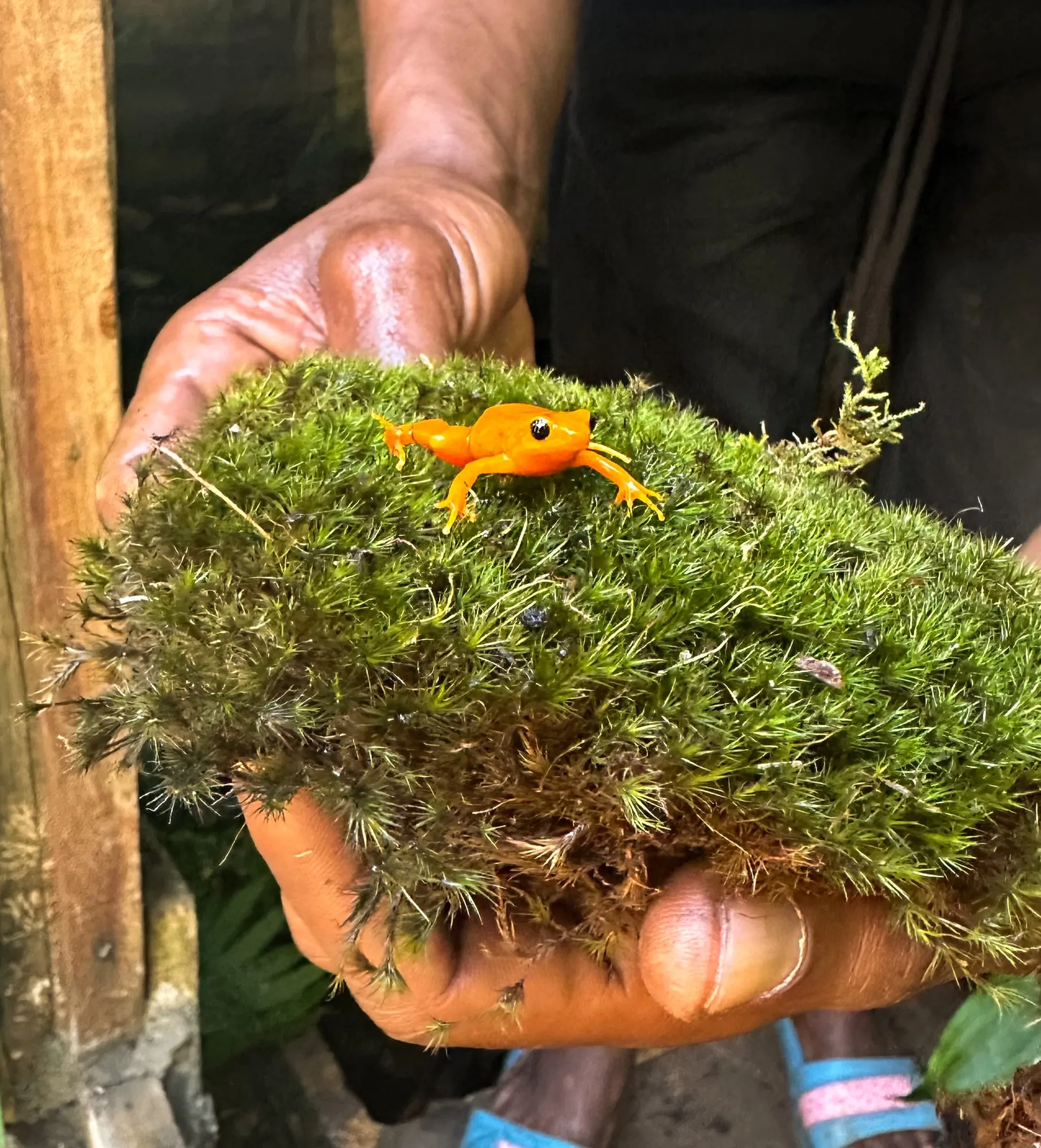
On the way we stopped at Peyrieras (Réserve Peyrieras), a small private reptile reserve where you can see various kinds of rare reptiles and amphibians endemic to Madagascar, such as the golden mantella – a tiny, gorgeous orange frog. An important detail: the animals at Peyrieras are kept in cages. Some are bigger and roomier than others – not ideal, and not necessarily for everyone. That said, you can see some fairly rare animals there that you probably won’t come across in the wild.
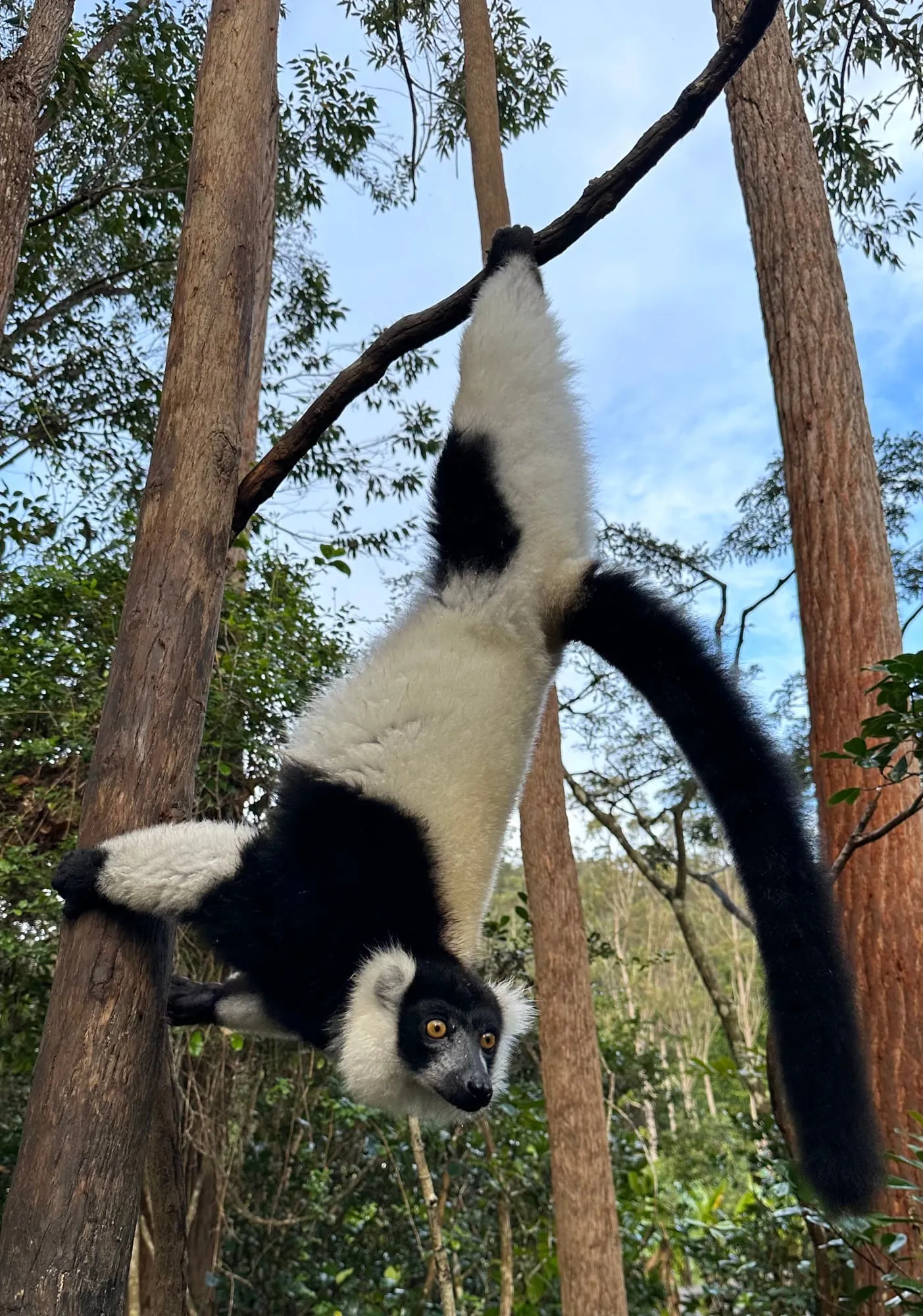
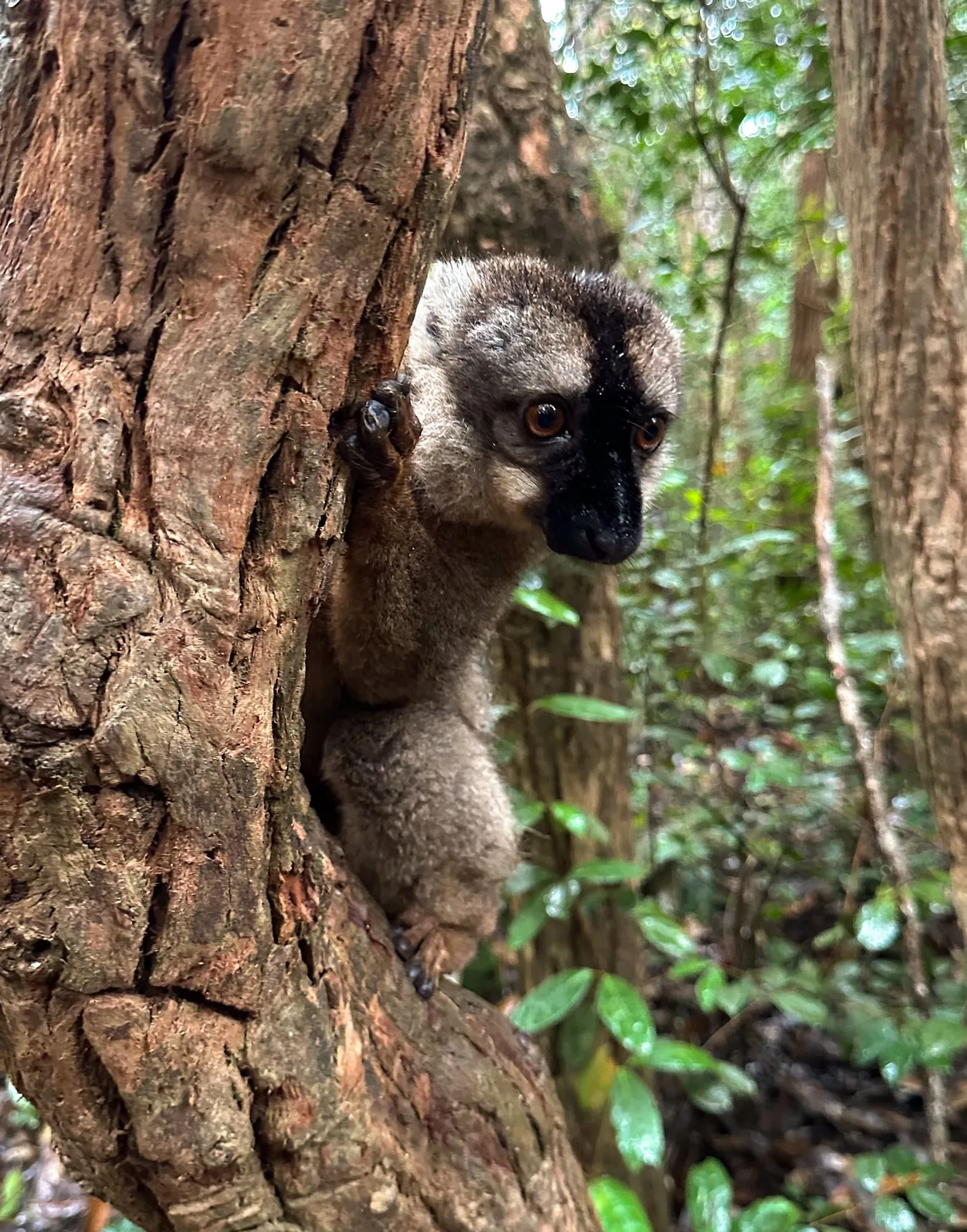
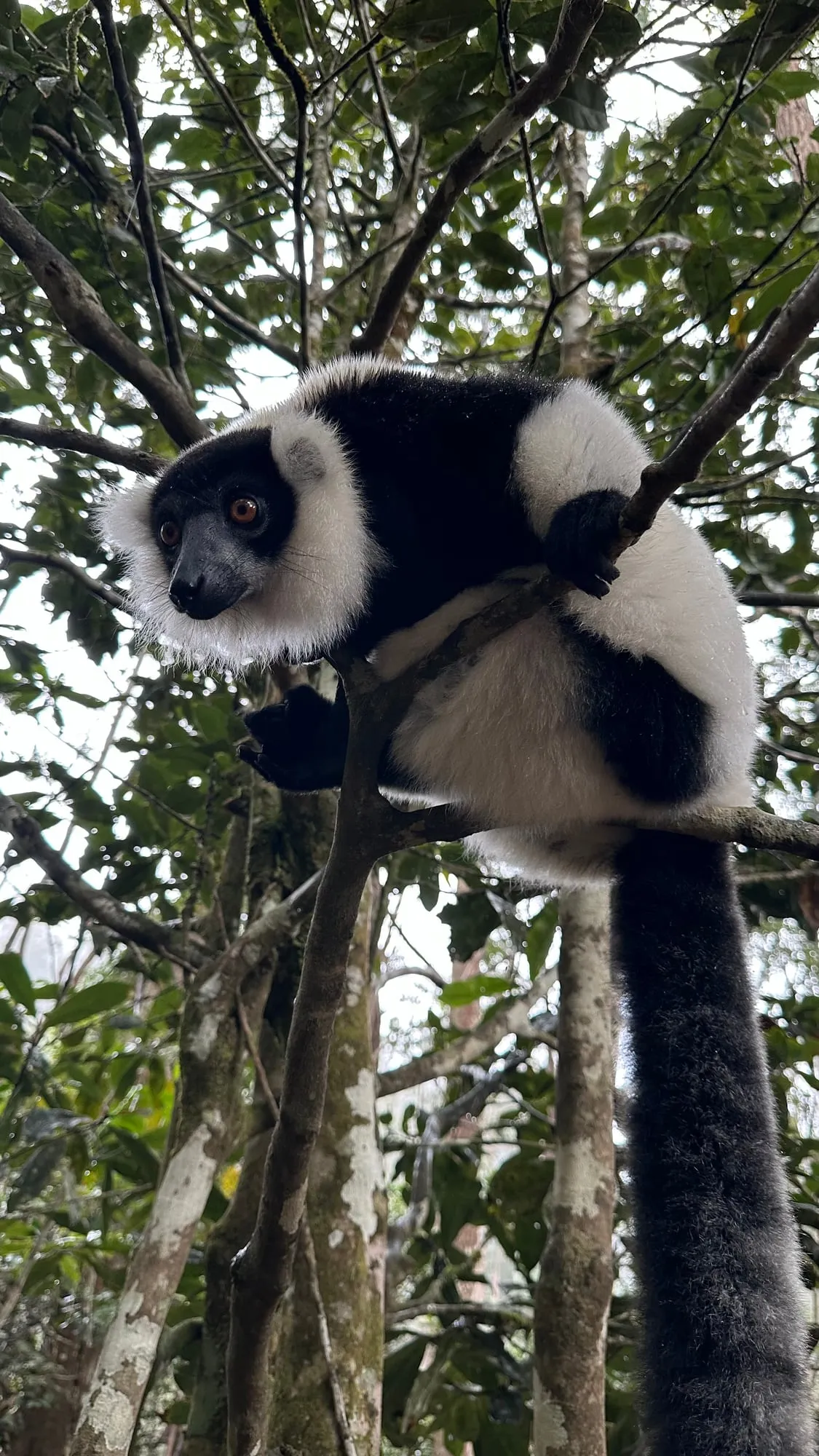
After about an hour’s tour of Peyrieras we continued toward Vakona, a private reserve set up by the owners of the lodge of the same name. At Vakona you start with a ten-second boat ride across a small channel of water leading to Lemur Island, where you can see four kinds of lemurs. Our first encounter with lemurs in Madagascar, and a particularly fun one. The lemurs were actually brought to this “island” 35 years ago, when keeping them as pets was banned in the country; those that had been kept in people’s homes and couldn’t return to the wild were released here. Lemurs are afraid of water, so they don’t cross the channel on their own and stay on the island. Across from it there’s another small island that’s closed to visitors, where they protect the golden sifaka. You can see it from a distance, bouncing along in the sideways hops usually called the sifaka dance. The tour was great fun – the lemurs are very friendly and aren’t afraid to come close, or even climb on visitors.
After Lemur Island we went on to tour the rest of the reserve, home to crocodiles, lizards, chameleons and little frogs. When we finished at the reserve we drove to the hotel and pre-ordered dinner (very common in Madagascar), and after a short rest we set out on a night walk in search of the mouse lemur – the smallest of the lemurs, active at night. We went with a local guide who knew how to spot these lemurs in the dark, from a distance. It was lovely.
We’d actually wanted to spend the night at Vakona Forest Lodge, but when we planned the trip they had no availability. In hindsight, that was wonderful. Instead we stayed at Relais de Mantadia – a great hotel. Dinner there was surprisingly good, the rooms are big and the place is gorgeous.
Hotel: Relais de Mantadia
Day 3: Andasibe – Ankanin’Nofy
We’d planned to start the day with a three-hour walk in the Analamazoatra reserve, but had to give it up because of a touch of dehydration. Instead, at 09:00 we set off toward Manambato, where we’d board a boat to Ankanin’Nofy.
The drive was long but especially beautiful, with lots of small villages along the road; we stopped to visit two of them. We visited a small market, bought bananas and sugar apples, and saw (from the outside) the modest homes and some of the steps in preparing rice for sale.
We went on to a light lunch, and after about seven hours – including a small crisis involving a truck blocking the road – we finally reached Manambato, where we got on a boat to Ankanin’Nofy. Because of the truck delay, other visitors were held up too, so instead of sailing straight to the hotel we stopped at a small island on the way, where an hour later there would be a night tour to see the largest nocturnal lemur, the aye-aye. Our suitcases, unlike us, went straight on to the hotel.
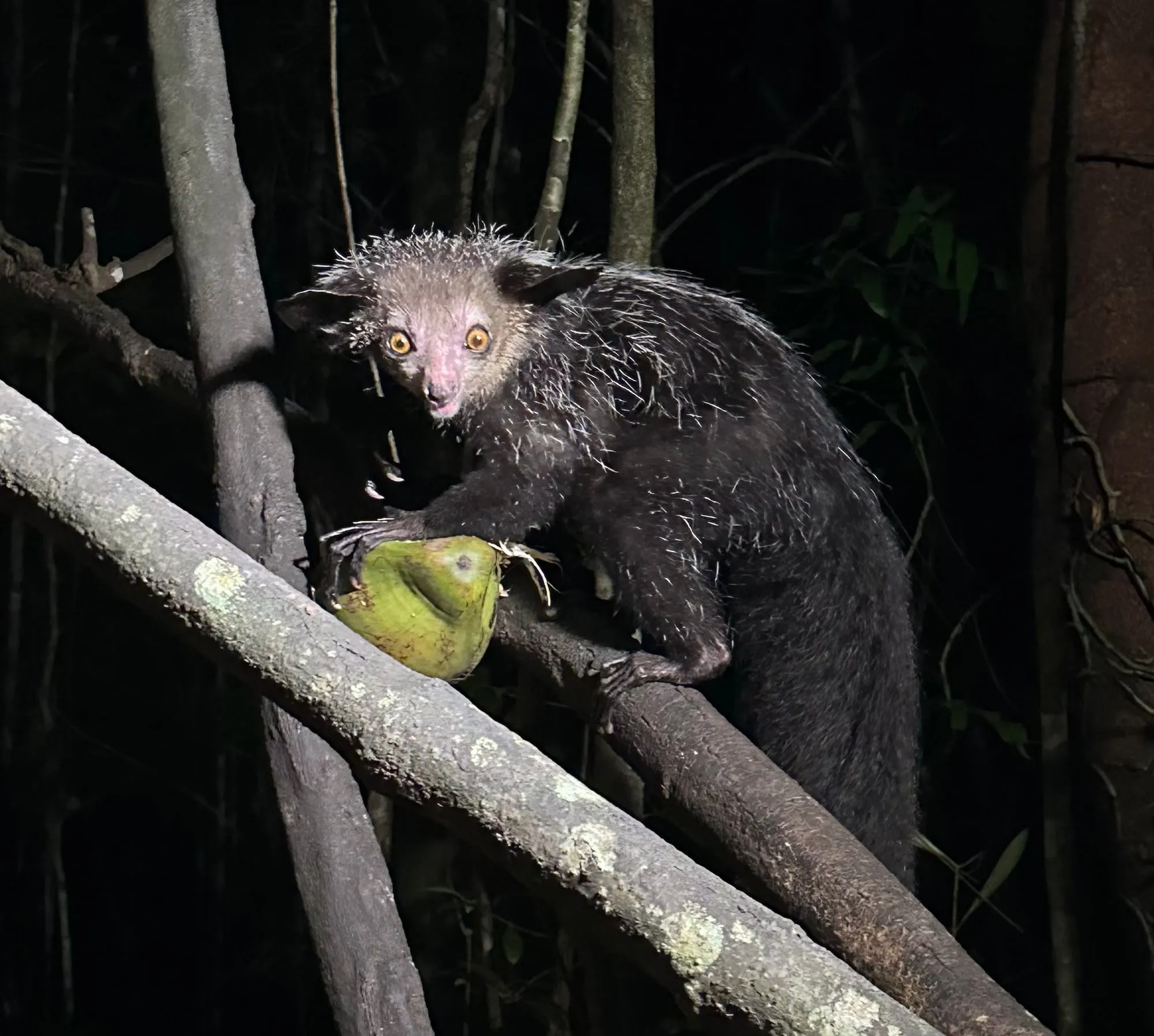
Together with another especially nice couple, we waited on the island for the guide and the rest of the group to arrive for the night tour. We chatted and watched a sky full of stars. In general, throughout the trip, because there’s relatively little tourism in Madagascar, the travelers we met yesterday were often the same ones we met the next day, which creates nice connections between groups of travelers from all over the world – and we enjoyed those encounters too. Once everyone arrived, we started the tour. We reached a feeding spot for the aye-ayes and watched them eat coconuts, opening them with their claws. We learned that an aye-aye’s claws never stop growing, so it’s important that it opens the coconuts itself using them. We were also told that these lemurs are critically endangered after years of persecution by locals, who believed they bring bad luck. In recent years huge efforts have been made to restore and protect the species, and to that end dedicated islands are being set up for them, where they can live peacefully and safely. After the tour we continued to the hotel – Palmarium Hotel Ankanin’Nofy, a stunning hotel inside the reserve.
An important detail: in Ankanin’Nofy there are two hotels with the same owners, Palmarium Hotel and Palmarium Beach. They’re very close to each other, but while Palmarium Beach sits on the lovely lakeshore, Palmarium Hotel is right inside the reserve and will let you meet quite a few lemurs on your room’s balcony. Highly recommended.
Hotel: Palmarium Hotel Ankanin'Nofy
Day 4: Ankanin’Nofy
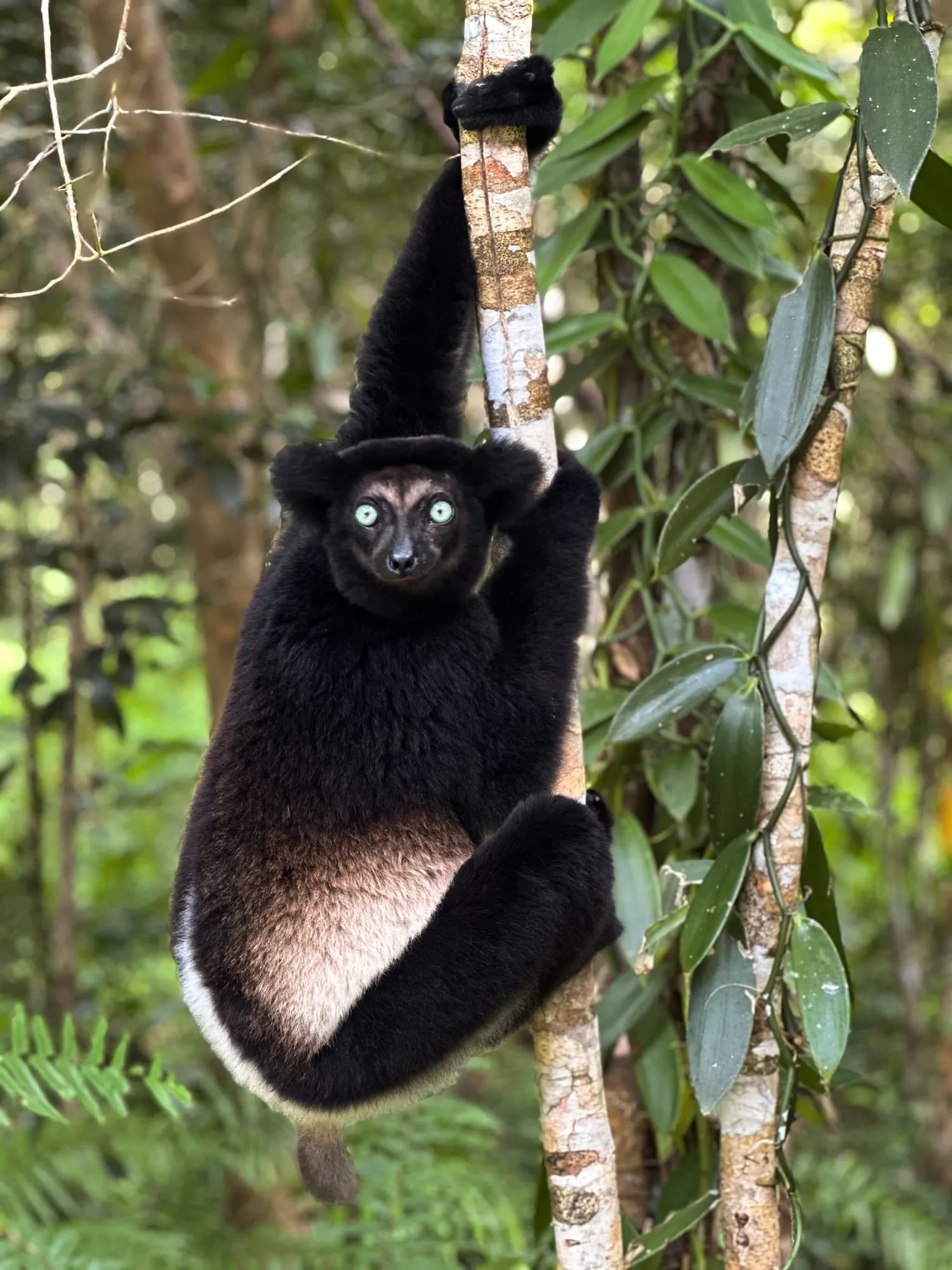
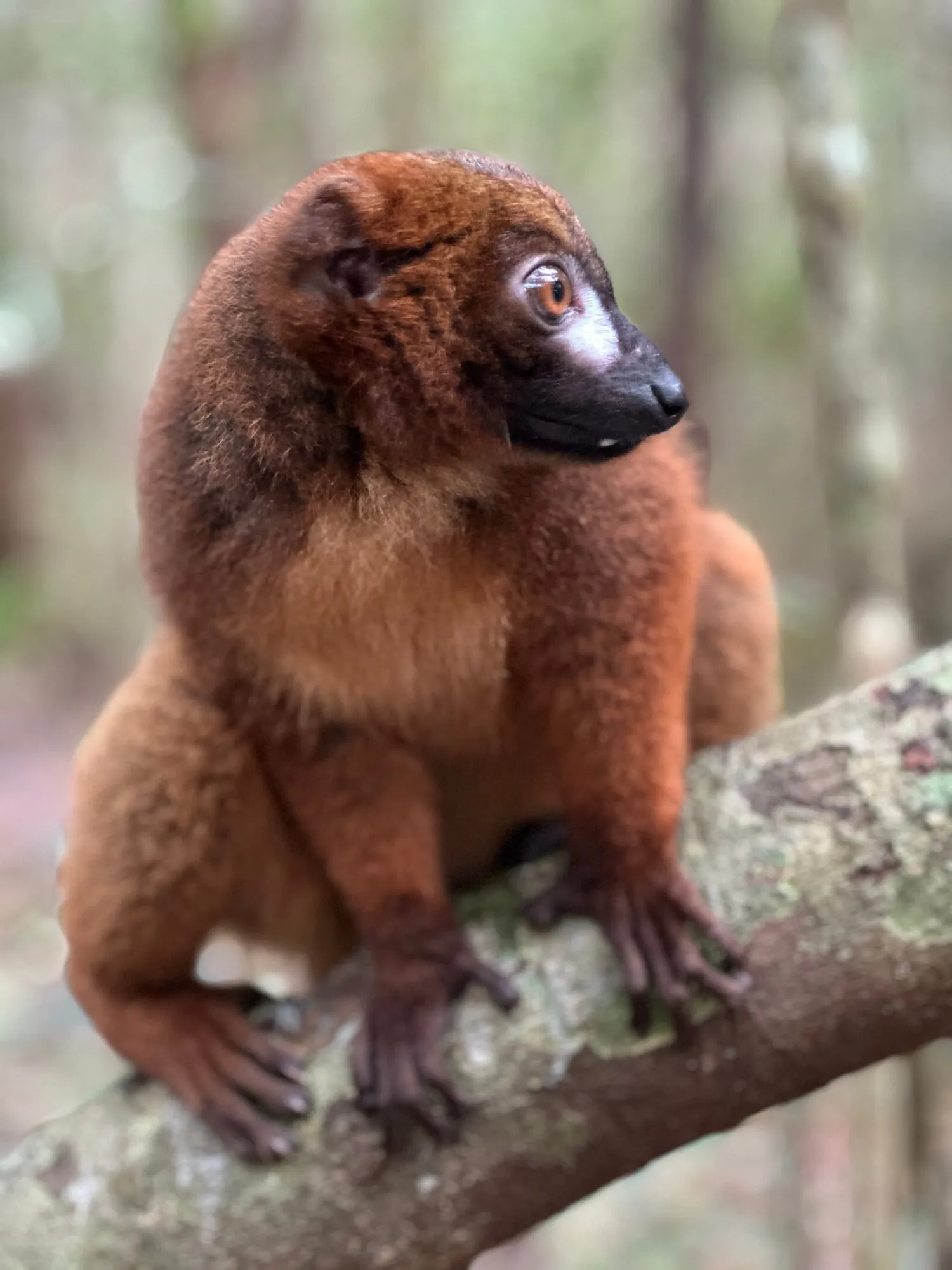
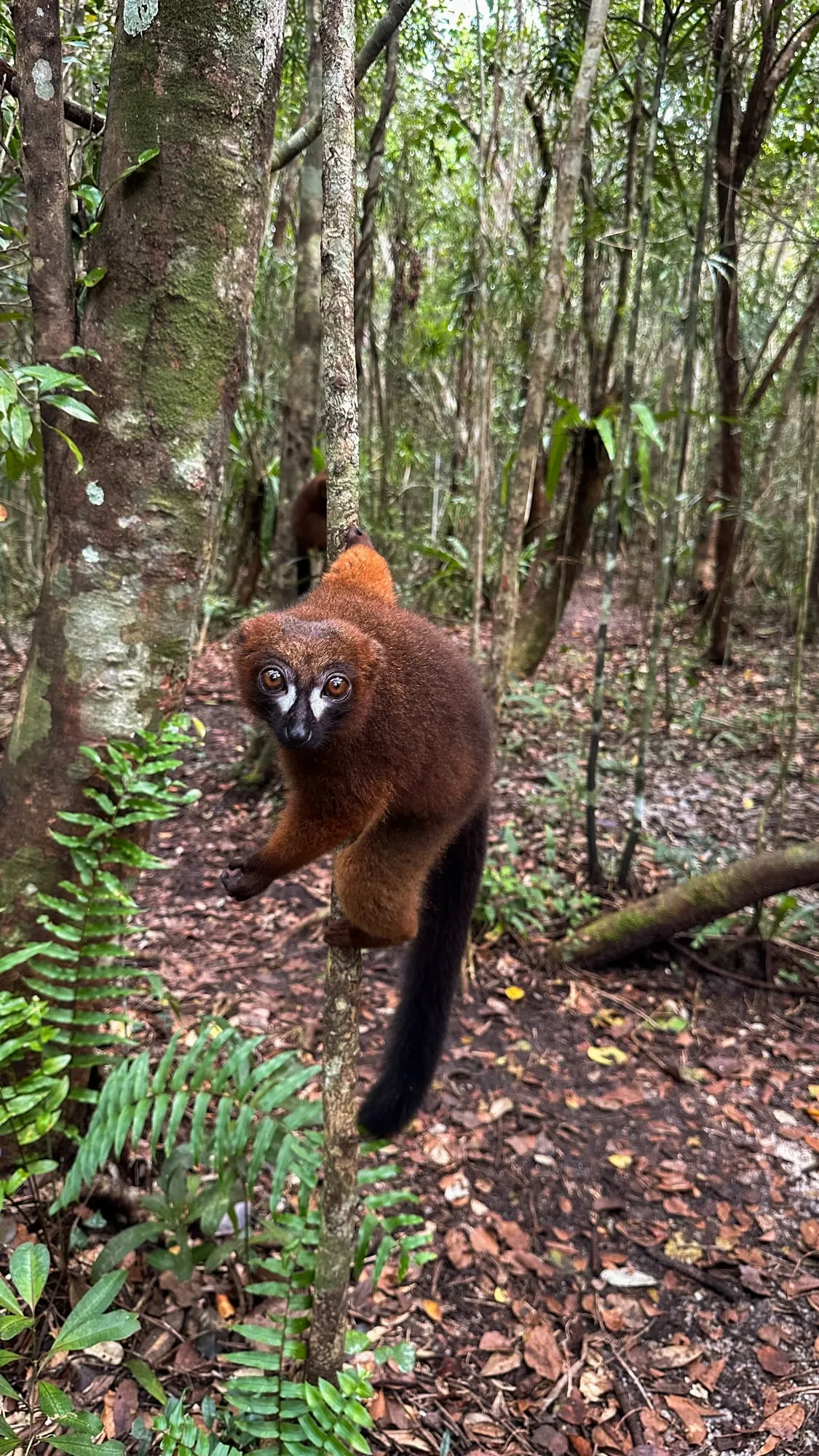
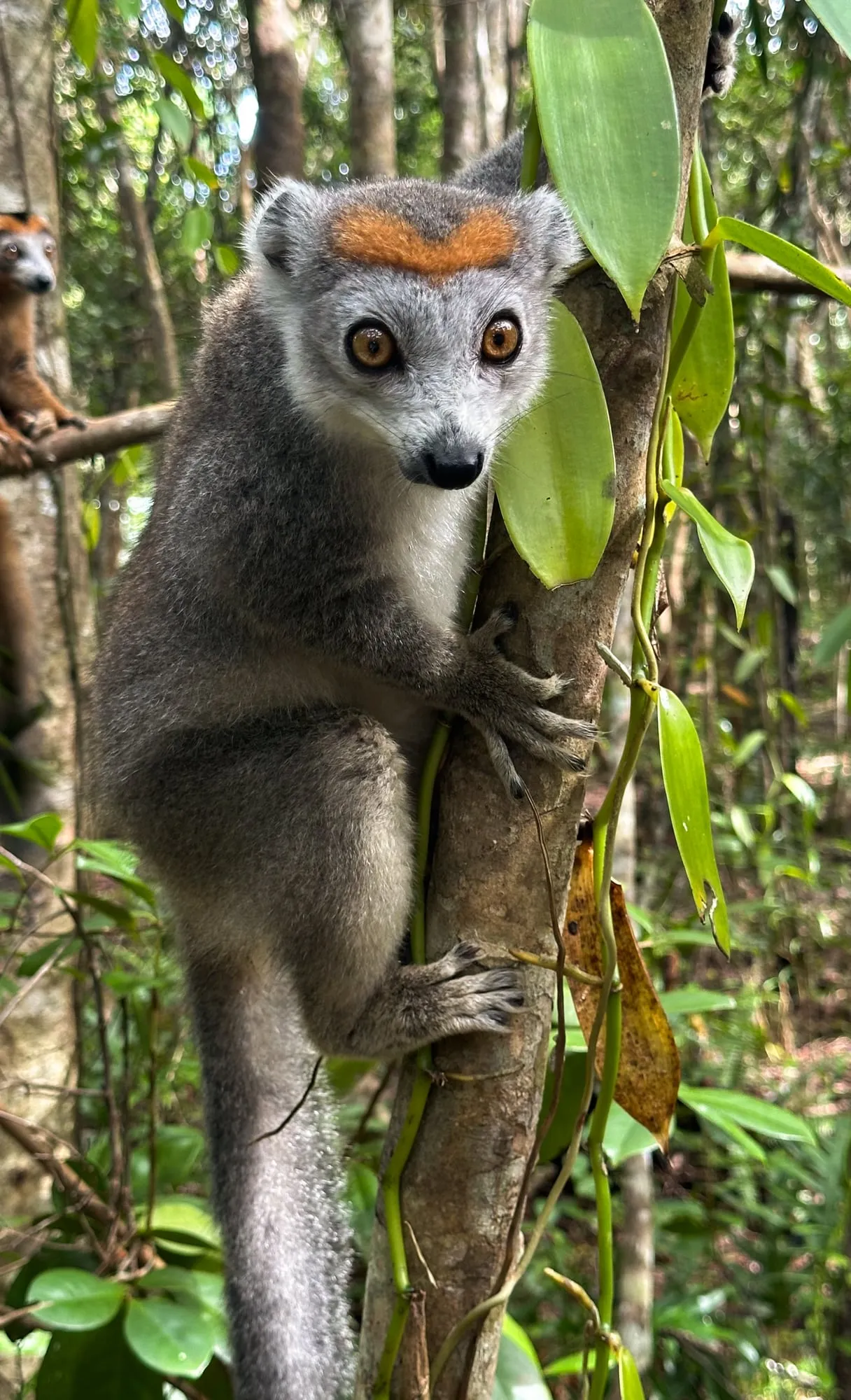
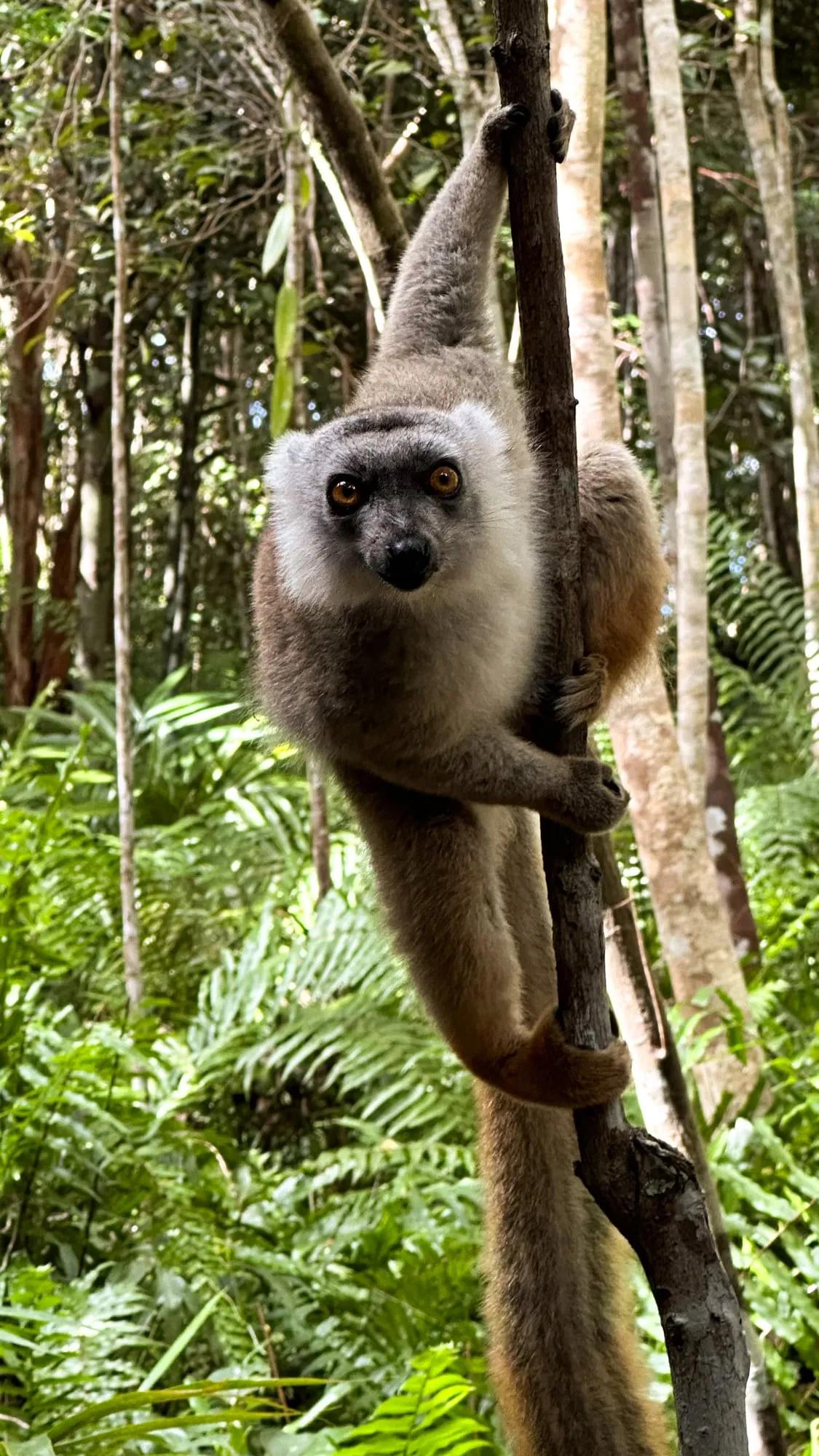
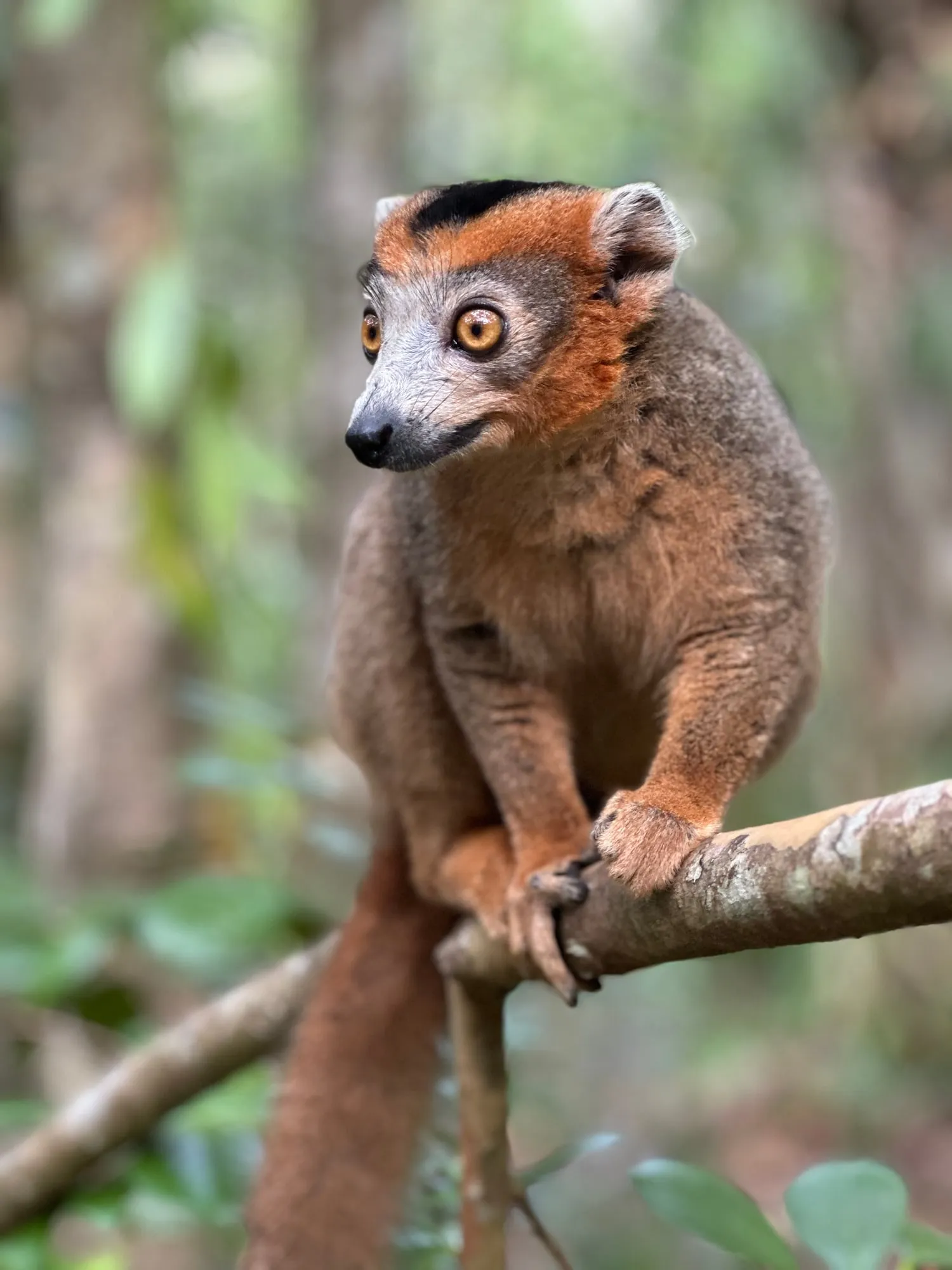
We woke up to a sunny morning in the reserve, with crowds of lemurs wandering around – some of them came to visit our room’s balcony, a truly magical experience. We did a guided walk of about three hours in the reserve and met – and mostly heard – the indri, the crowned lemur, the red-bellied lemur and more. We enjoyed every moment of the walk. We spent the rest of the day at the hotel, on the lakeshore and among the lemurs.
Ankanin’Nofy was one of the places we loved most on the trip. The lovely setting, together with the experience of different kinds of lemurs fearlessly roaming among the visitors – highly recommended.
Hotel: Palmarium Hotel Ankanin'Nofy
Day 5: Ankanin’Nofy – Tana
We left the Palmarium early in the morning by boat to Toamasina (Tamatave). On the way we’d planned to stop at a small fishing village on the Pangalanes Canal, but rain that started falling disrupted our plans a bit. In Toamasina we visited a local market (Bazary Be), walked around near the port a little, saw an endless line of trucks waiting at the port entrance, and learned that it’s the country’s main port and that most goods actually go in and out through it.
We went on to lunch at Hôtel Marina Beach, which was very nice, and then drove to the airport for our flight to Tana. We spent the night in Tana at the same hotel as on the first day. In the evening we took a seven-minute walk to Le Petit Verdot, where we probably ate the tastiest meal of our trip. Then back to the hotel.
Hotel: Maison d'Hôtes Mandrosoa
Day 6: Tana – Morondava
In the morning we left the hotel early for the airport and our flight to Morondava, surprised once again by the number of people in the streets, stalls selling fruit and vegetables on every corner, and lots and lots of pedestrians, cars and motorbikes sharing the road in the absence of sidewalks. On the way to the airport we stopped at a vanilla shop. It was important to us to choose good-quality vanilla, the kind that won’t go bad after a few weeks (and yes, there’s plenty of that on every corner). Anyway, we bought our vanilla at a shop called L’Art des Épices. The vanilla there is more expensive than in the local markets but is supposed to be high quality, and to this day (two months after the trip) it hasn’t disappointed.
After an hour’s flight we reached Morondava and discovered our favorite town of the trip. Photos can’t convey its magic. The weather is noticeably warmer than in eastern Madagascar; on the main street you can see women with a mud mixture on their faces to protect against the sun, baobab souvenirs on every corner, fish and seafood restaurants (it is a beach town, after all) and more.
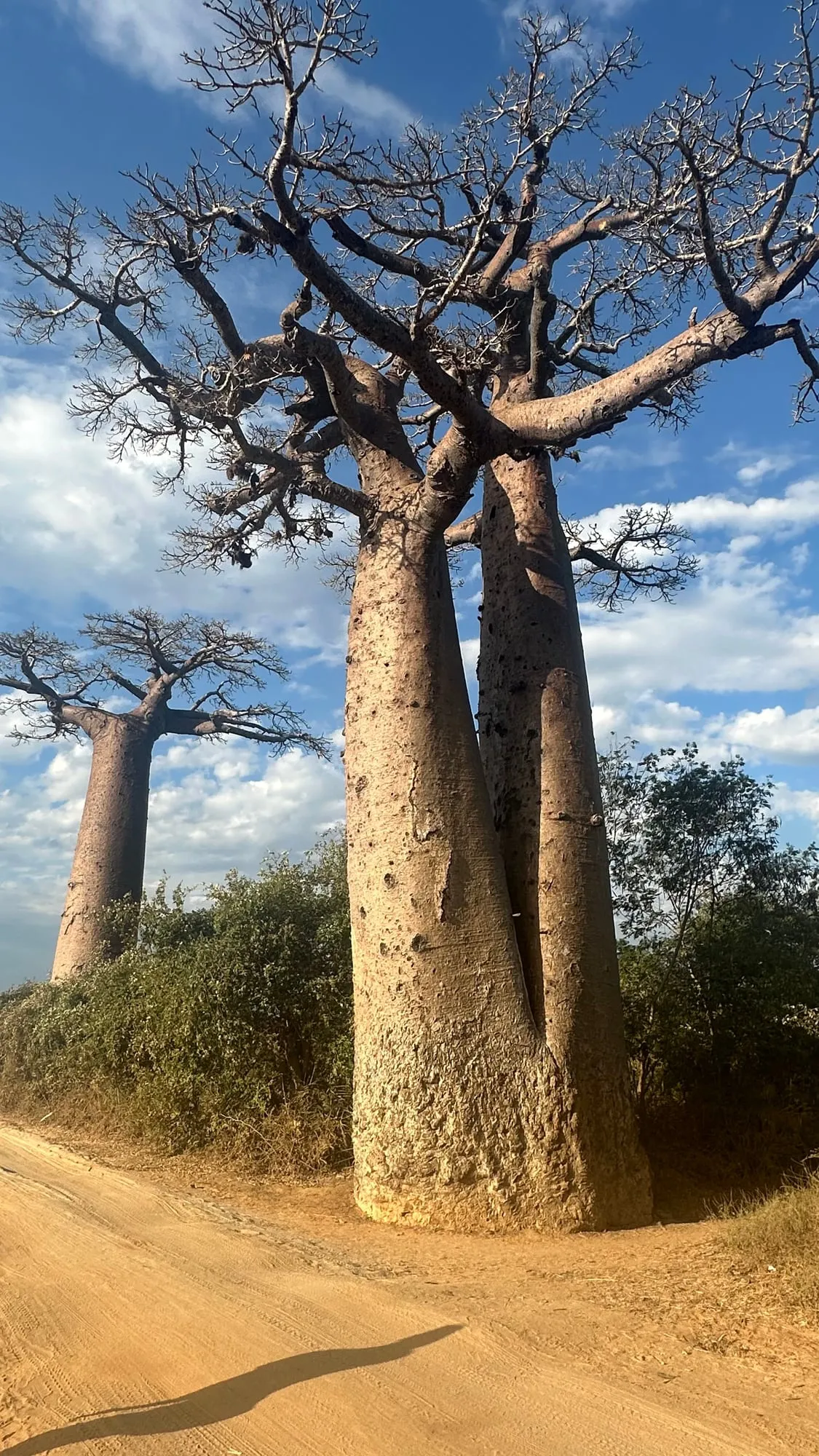
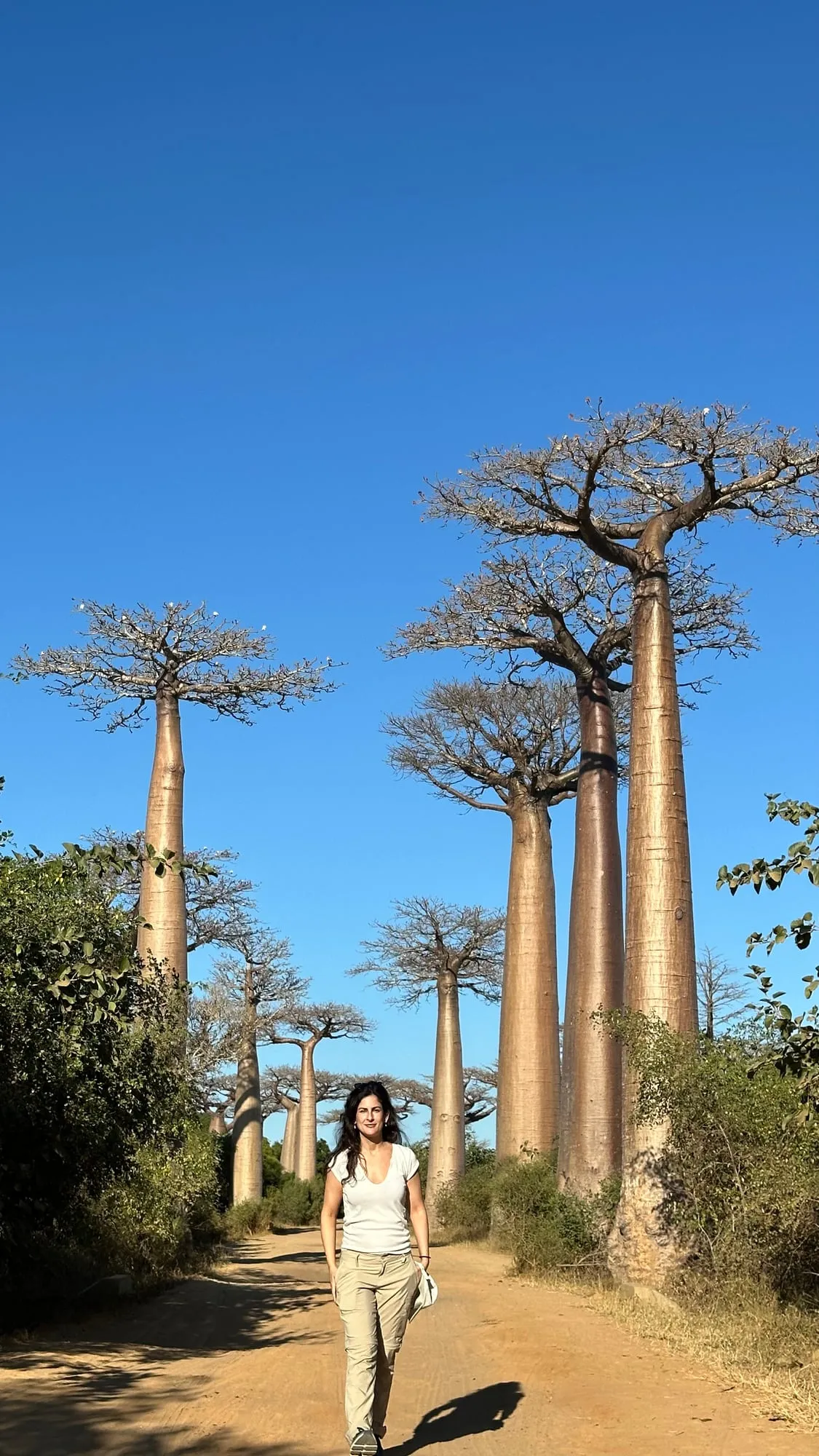
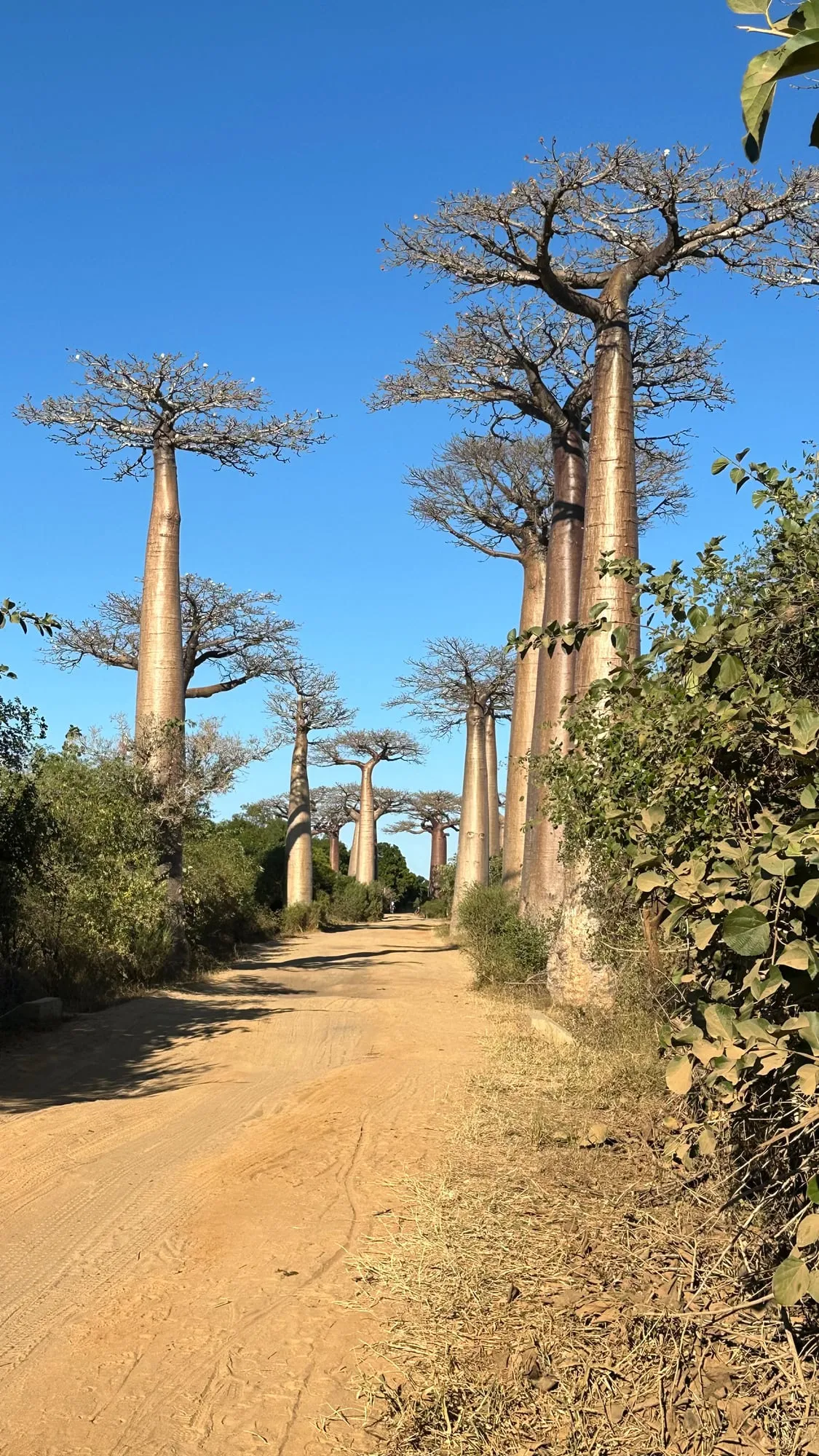
We went to settle into the hotel, and instead of having lunch there we decided to eat at a restaurant in town on our guide’s recommendation. Around 15:00 we left the restaurant for the baobab reserve. We wandered around and took photos, of course, until after sunset. As sunset approached, more and more people arrived and the avenue filled up. We ended the day with a pleasant dinner at the hotel.
Hotel: Palissandre Cote Ouest resort & SPA
Day 7: Morondava – Bekopaka – the journey to the Tsingy
Around 07:15 we set off for Bekopaka, a tough drive of about 10 hours including stops. From Bekopaka we’d head out to the Tsingy the next day. On the way we passed the Avenue of the Baobabs again. We stopped for another short wander and a few photos, this time with almost no people and gorgeous morning sun. After a quick loop we got back in the car for the longest and hardest drive of the trip. The road to Bekopaka isn’t paved and is full of potholes and bumps, and the car bounces the whole way – but it’s definitely less awful than we’d expected and than we’d been warned.
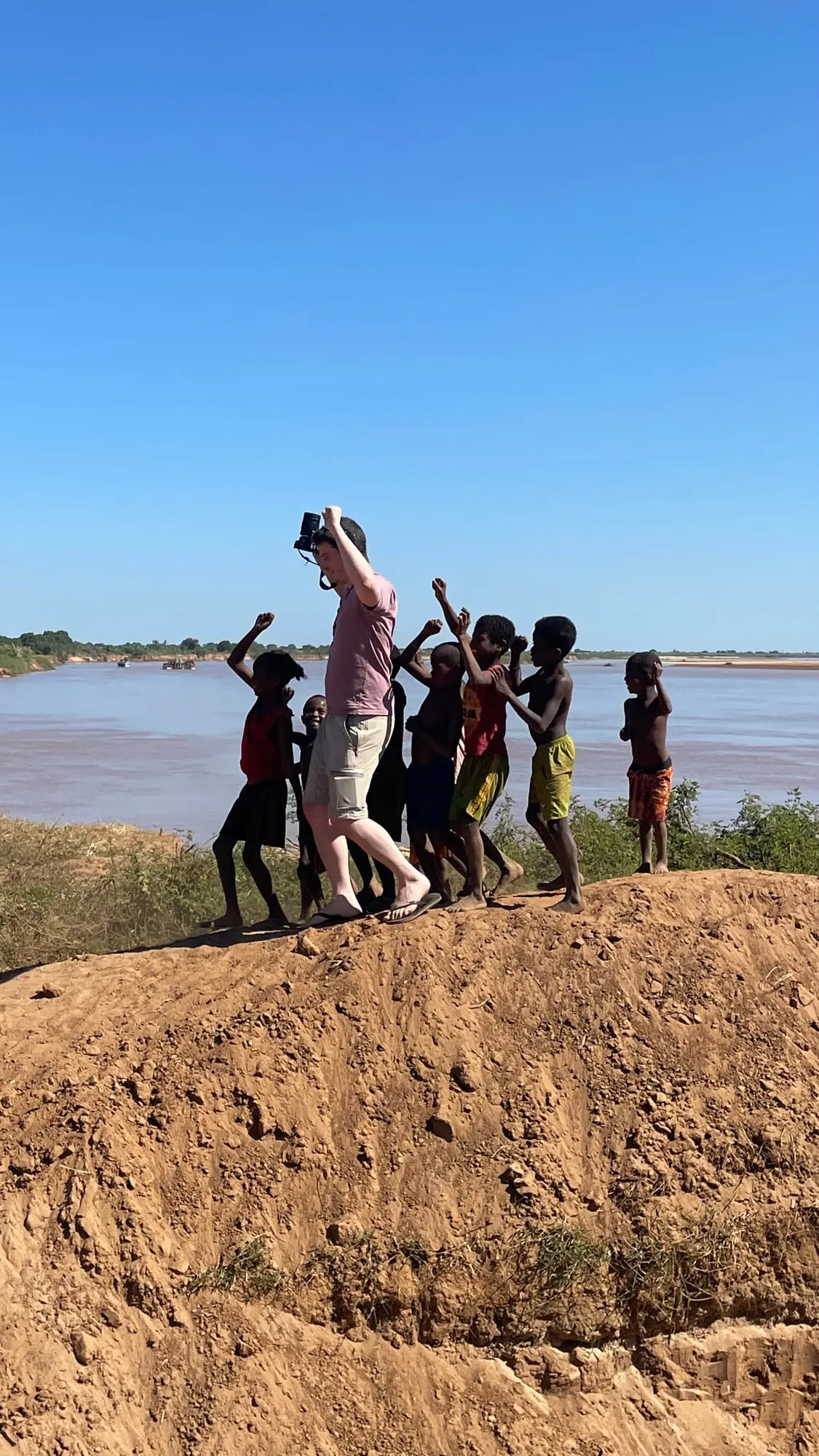
On the way we came across a snake on the road and stopped, along with the cars in front of and behind us, to take pictures and make sure it got off the road. After about four hours of driving we reached the spot where we’d take a “ferry,” which our car would board too, to the town of Belo, where we’d have lunch and continue on. While waiting for the ferry, again together with the people from the other cars, a group of especially cheerful local kids showed us their dances, asked us to film them and show them the videos, played with us, and so on. It was really lovely. We drove onto the ferry, a great experience in itself, and sailed to Belo. In Belo we had lunch, gave our empty bottles to the kids in town, and continued on our way.
About 10 minutes before reaching Bekopaka there’s another small ferry to cross with the car – a very quick one. On the other side of the river, in a small village, we met local women separating rice grains; we stopped briefly to watch and then continued to the hotel. An especially long day of driving, but with plenty of good and special experiences along the way.
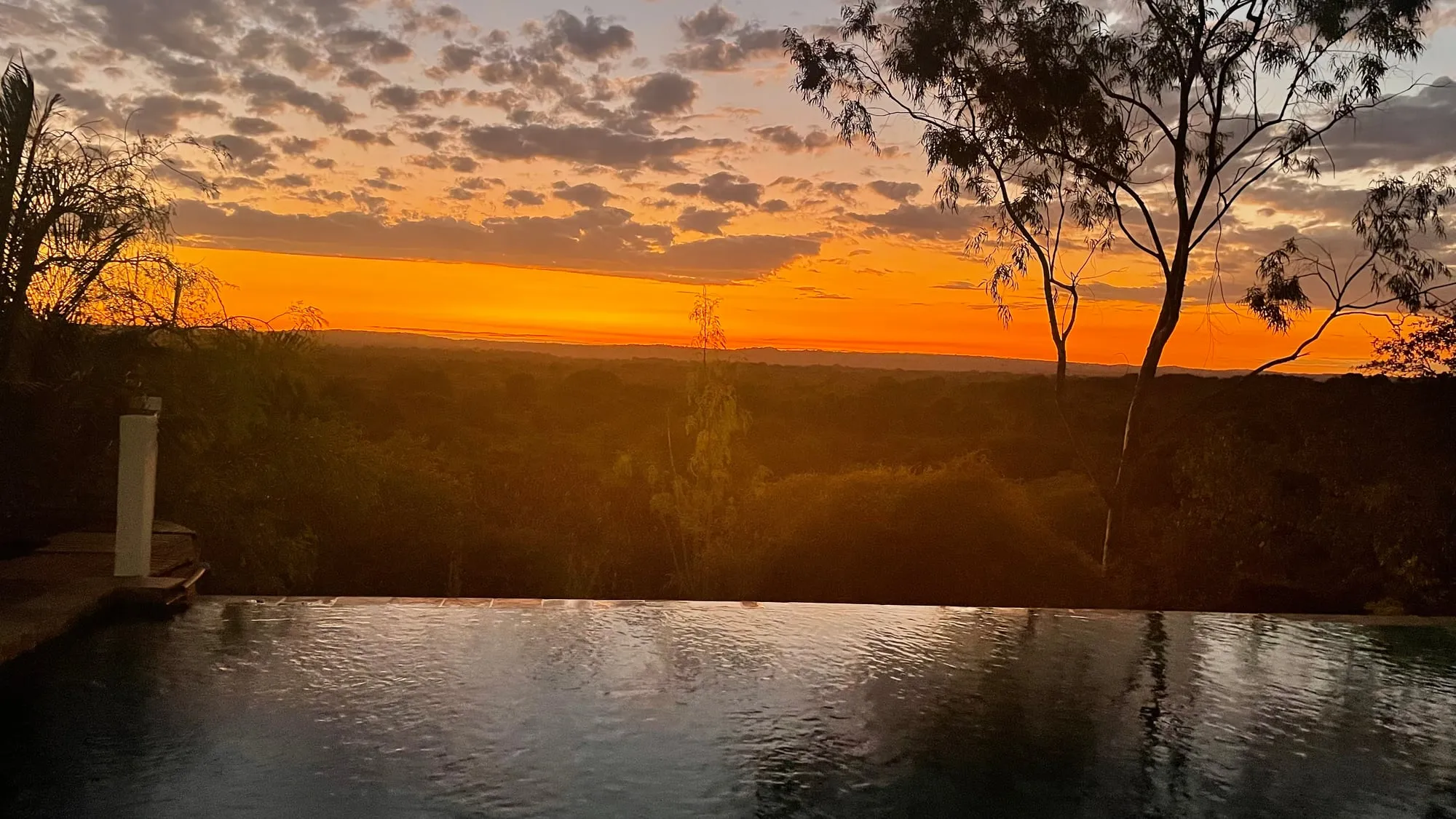
Hotel: Soleil des Tsingy – a stunning hotel with an amazing sunset view.
Day 8: Tsingy
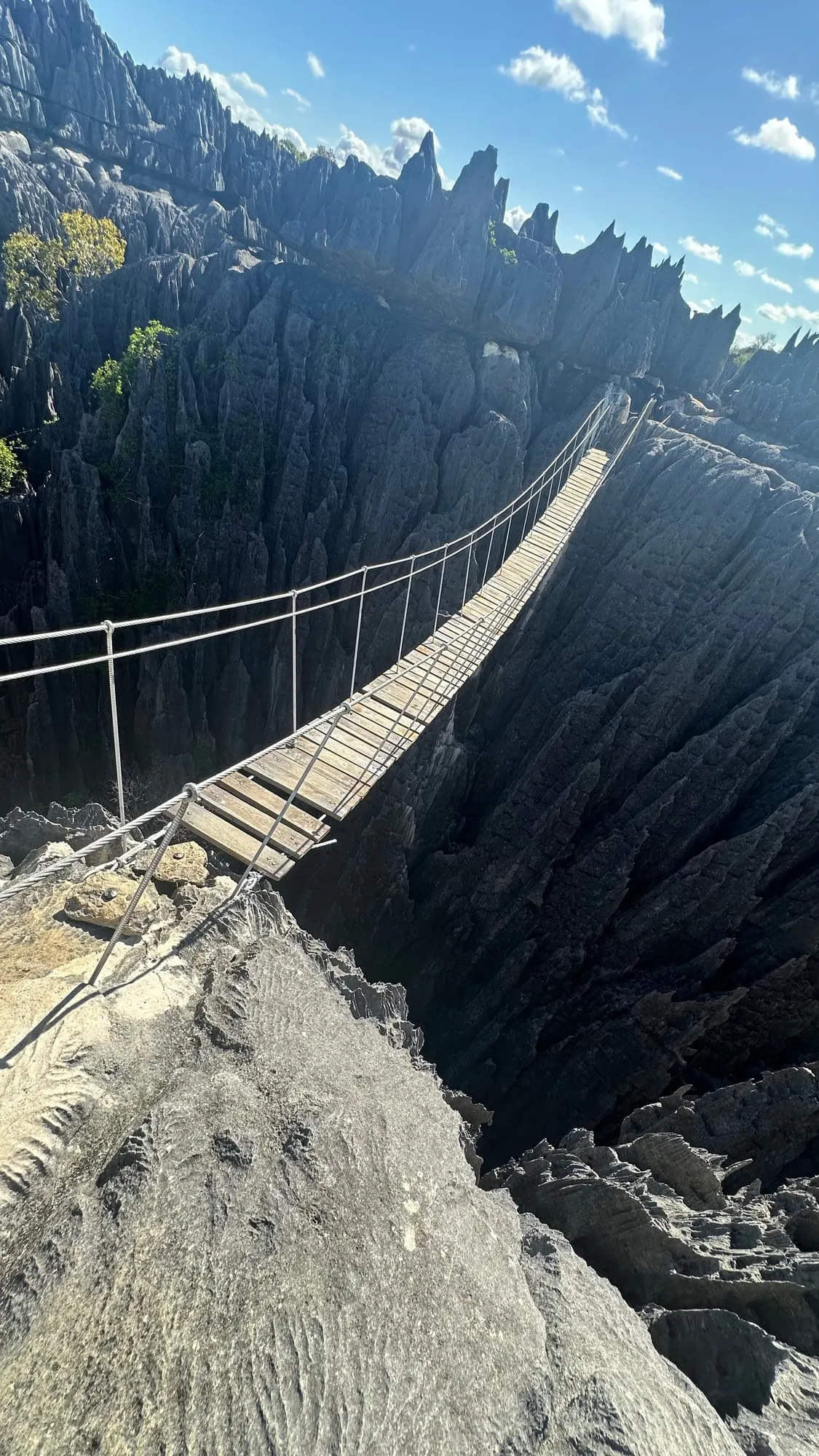
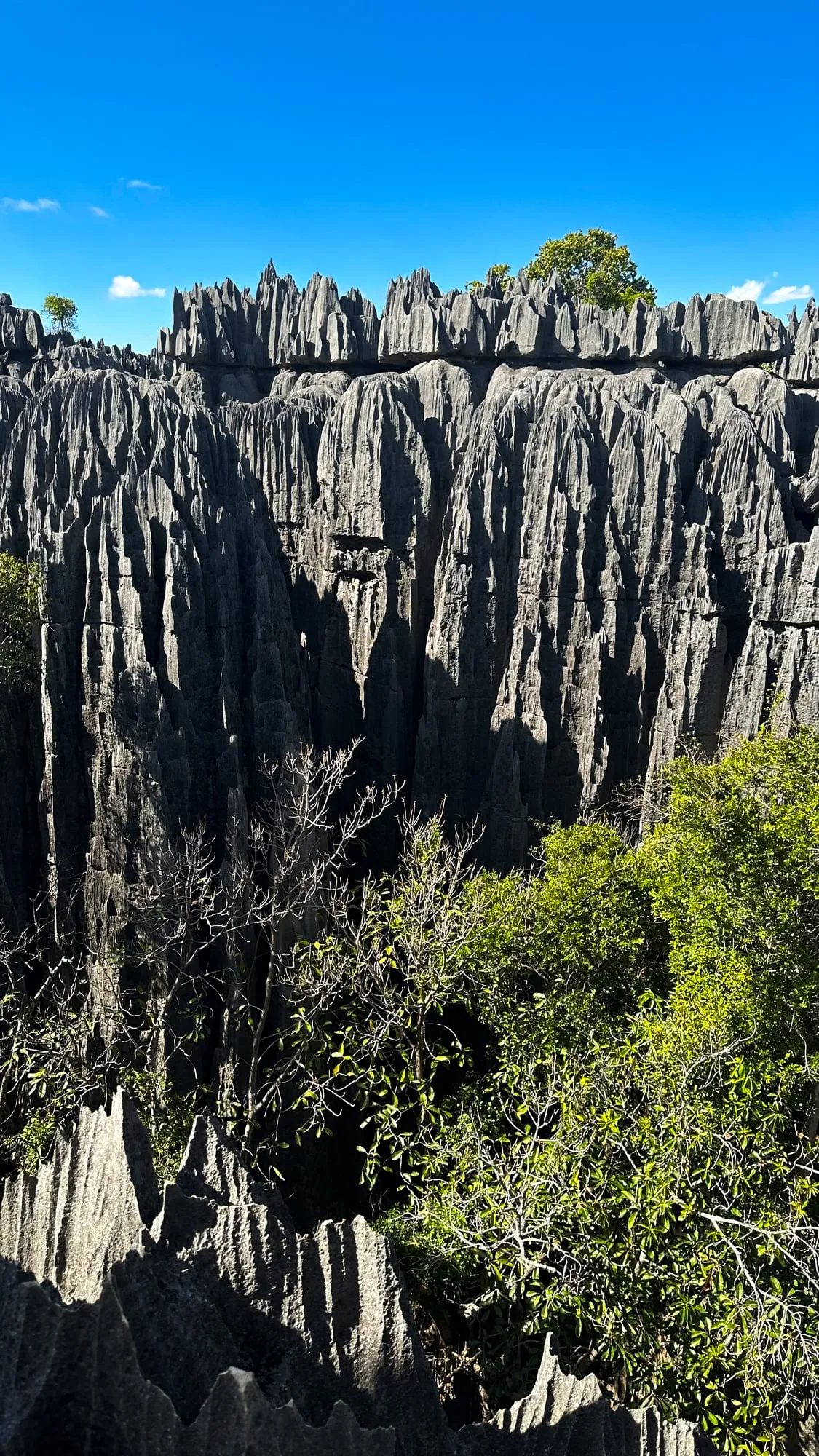
At 7:00 we set off for the Grand Tsingy. About an hour’s drive and we were there. The trail itself is 3 km and made up of three parts. The whole route took us something like 4.5 hours.
In the first and last parts of the trail you walk through a small forest – not a hard walk. You can see a few lemurs in the forest; we saw a family of white sifakas and a kind of sportive lemur hiding in a tree. The middle part of the trail is the more challenging one. It involves climbing over rocks and up ladders, and for it you’re fitted with a harness at the start of the trail (for safety in certain sections). The views are breathtaking and worth every moment, and the highlight is the big bridge, roughly halfway along the trail. On parts of the route you have to make short stops so that a group ahead of you can finish crossing or come down from the viewpoints. Generally speaking, I’d say the trail suits people of moderate fitness and up, with no fear of heights. Worth keeping in mind: there are a few narrow passages, but not too narrow. After the trail we went back to the hotel to rest.
Hotel: Soleil des Tsingy
Day 9: Bekopaka – Morondava
A day of driving back to Morondava. We made some nice stops in villages along the way. We stopped at a baobab that’s sacred to the locals, and at the Baobabs in Love – a baobab split down the middle that looks as if it’s hugging itself.
Overnight in Morondava
Hotel: Palissandre Cote Ouest resort & SPA
Day 10: Morondava – Miandrivazo
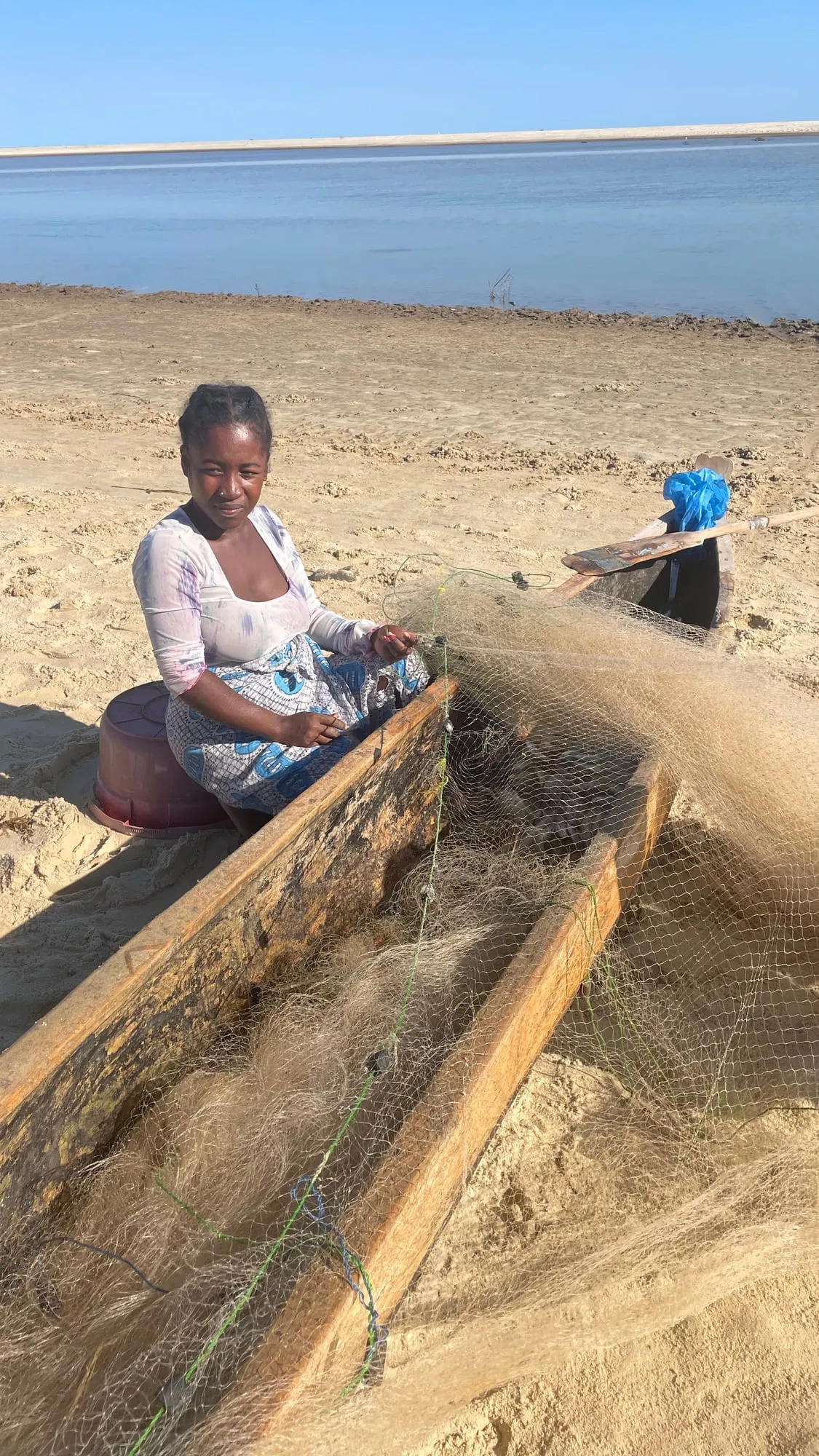
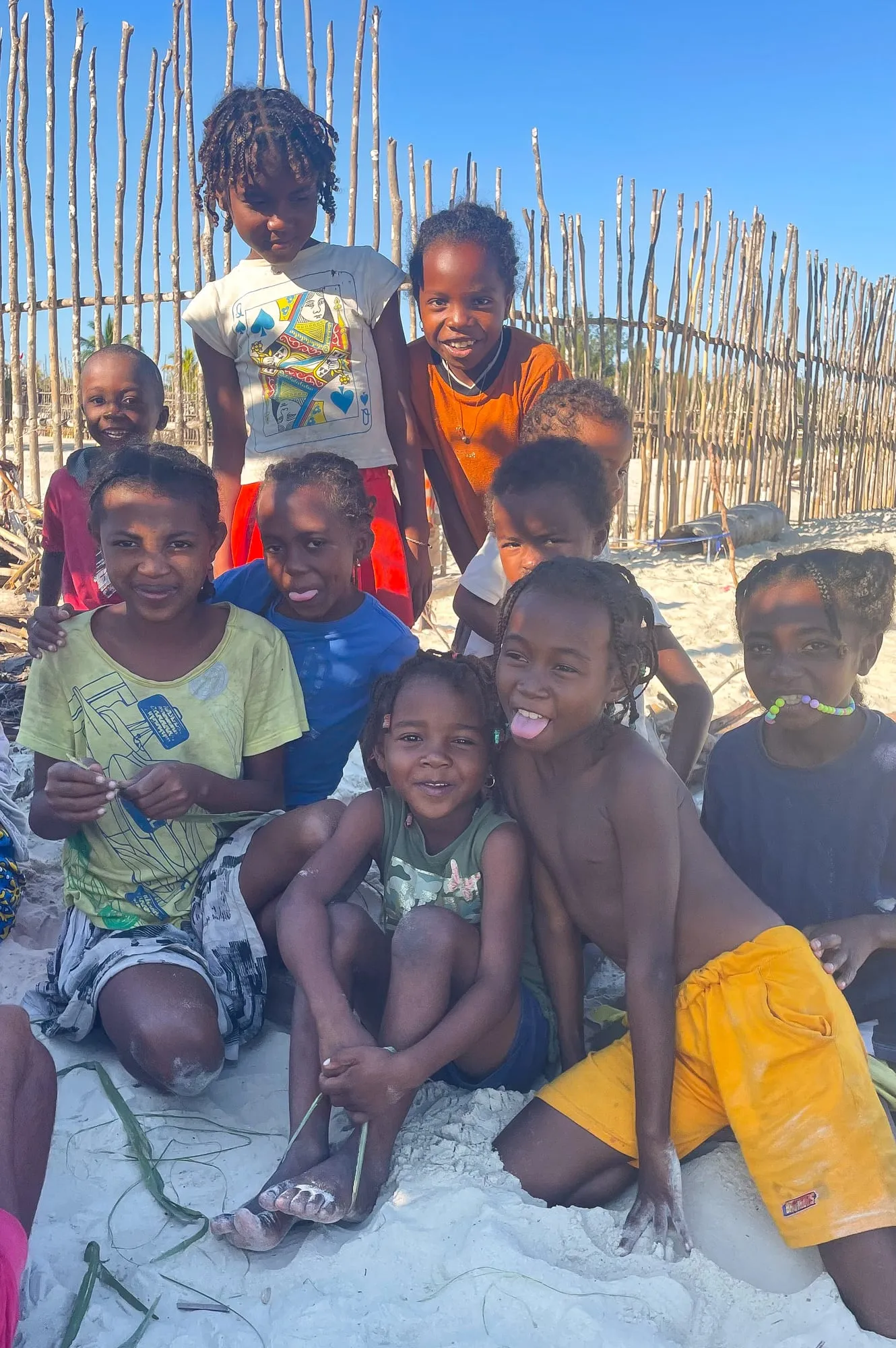
We decided to take the morning easy and recover from the drives and the Tsingy. We took a walk along Morondava’s beach and met fishermen coming back from fishing, women working on the beach alongside their children, sorting rice and packing meat, and big groups of kids playing ball and all sorts of improvised games.
For lunch we ate at Le Corail – very, very much recommended (except that you should keep in mind that times there are very much a suggestion), and then set off for Miandrivazo, a stop on the way to Antsirabe. We didn’t want to do too long a drive to Antsirabe in one day, so we decided to stop on the way just to sleep in Miandrivazo.
Hotel: Soalia hotel
Day 11: Miandrivazo – Antsirabe
After breakfast we left Miandrivazo for Antsirabe, the third-largest city in Madagascar. In Antsirabe we visited the workshop that makes miniatures from recycled materials. We watched a demonstration of how a bicycle wheel is made – honestly, pretty boring, but short. Behind the workshop was a textile workshop with tablecloths and table runners. We really loved the fabrics and bought a bag and two table runners (prices aren’t cheap). Next we’d planned to visit a gemstone workshop, but it was closed – it was Sunday. We took a walk around town, stopped by a small sweets stall, and met a little girl who looked confused next to it. We communicated with the saleswomen mostly through hand gestures and bought candy for the girl and for a few other kids who were around. They were happy, and so were we. Most places were closed because of the weekend, but we stumbled on a really cute performance and sat down there with the townspeople. Needless to say, we were no less of an attraction than the show itself.
Hotel: Plumeria Hotel
Day 12: Antsirabe – Ranomafana
We waited for the morning so the supermarket that had been closed the day before would open. We stopped by and bought notebooks and pens for the kids along the way; we added some candy, hair ties and hair clips for the kids, and a few things for a picnic lunch for ourselves, and set off toward Ranomafana. A 10-hour drive including stops (one of the roads was closed, so we took a detour that took a while). On the way our guide took us to visit the home of locals who make geranium oil. A difficult experience, but an interesting one. The kids, as usual, were lovely. We gave them notebooks and pens and continued on our way.
While still on the road we decided to skip the night walk in Ranomafana. We’d already seen the mouse lemur in Andasibe, and we understood that the walk here means walking along the roadside looking for the lemur. We preferred to rest after the exhausting drive.
Hotel: Thermal hotel
Day 13: Ranomafana
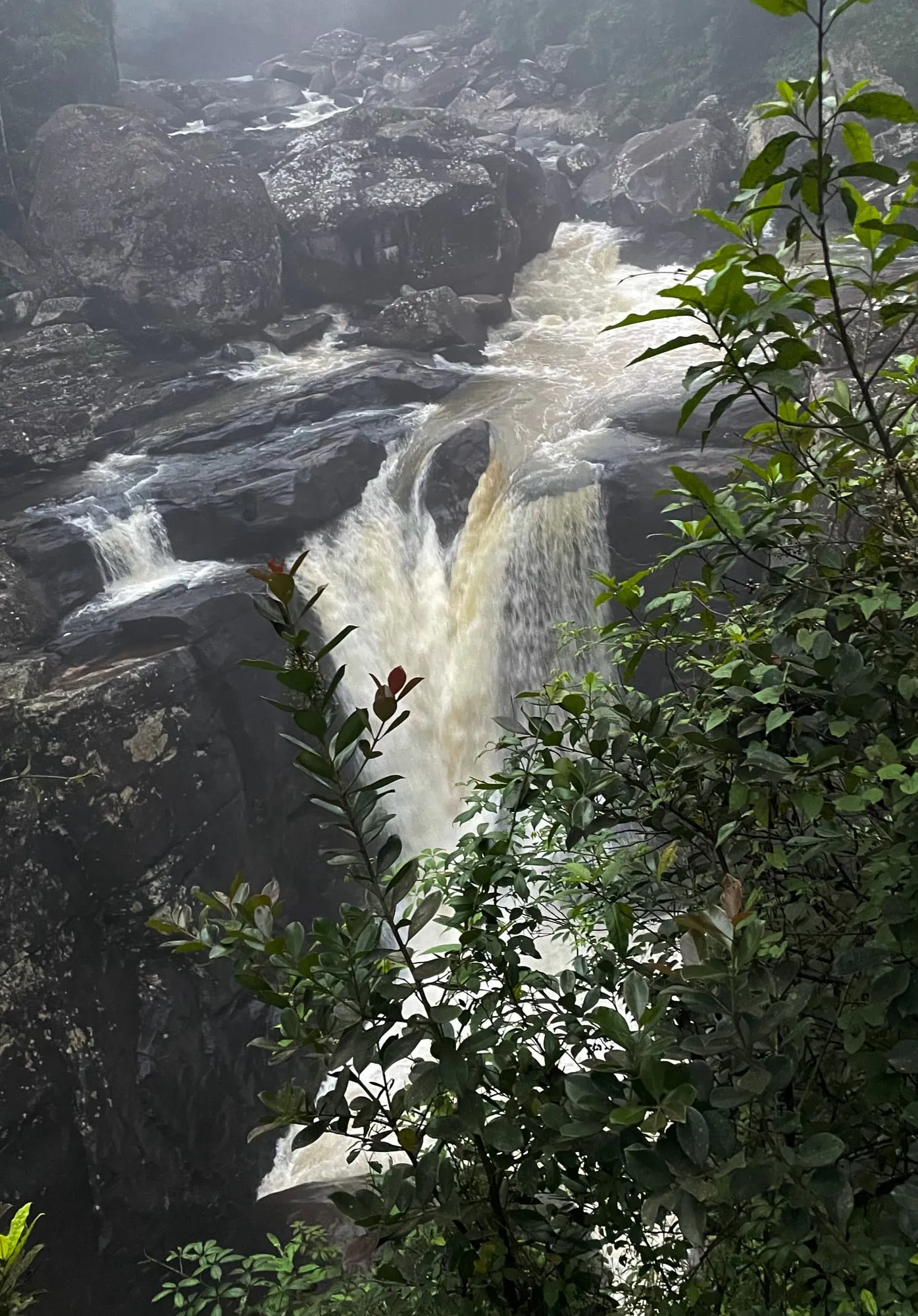
In the morning we were supposed to leave at 7:30 for Ranomafana National Park, but because of rain that refused to stop, our guide said we should push the departure back an hour. The rain didn’t stop after an hour either, and we went back and forth a lot over whether to postpone the walk to the next day or go despite the rain. In the end we decided to go anyway – not a particularly wise decision.
We set out at around 10:30, in light rain, at an hour when the lemurs are less active and mostly asleep – especially in the rain, curled up in the treetops. On top of that, this walk is usually done with a guide and an animal spotter. In our case all the spotters were at an event in the village, so we went with just a guide. A combination of a staff shortage, the late hour we left, and bad luck – we saw only two kinds of lemurs, the bamboo lemur and the woolly lemur, which is active at night.
Needless to say, before we went into the forest we asked where the animal spotter was, and were told he was already inside the forest and we’d meet him there (sure ☺️). Still, the forest itself was lovely, and we also saw the red-eyed chameleon that disguises itself as a leaf and is very typical of the park.
We debated a lot whether to do the walk again the next day to try to see the sifaka and more kinds of lemurs, and in the end decided to give it up.
A few lessons learned:
- Ranomafana, like Andasibe, is a rainforest – meaning it rains most of the year. My advice: insist on setting out early in the morning, at 7:30, even if it’s raining. The rain doesn’t really bother you while walking in the park – the trees block quite a lot of it – and when we talked to other groups who’d gone out early despite the rain, they told us they’d seen loads of lemurs.
- As for the animal spotter – try to make sure he comes with you; there’s a significantly lower chance of seeing lemurs without him ☺️ We did try asking, but it didn’t help us much. Still, if we’d known they weren’t around that day, we’d have postponed the walk to the next morning.
- A raincoat, a wool hat and good waterproof walking shoes will come in very handy.
Even though we didn’t see the sifaka, we enjoyed the walk in the forest. It’s full of special plants, reptiles and insects.
Hotel: Thermal hotel
Day 14: Ranomafana – Ambalavao
At 8:30 in the morning we set off for Ambalavao. On the way we visited Fianarantsoa – a walk around the old town and a bit of the market. We really loved the town. After roughly another hour’s drive we reached Ambalavao. Our guide had planned for us to visit the big zebu market there, but we preferred to skip the difficult sights. Instead we visited a cute silk-making workshop and another workshop that makes paper.
Hotel: Betsileo Country Lodge
Day 15: Ambalavao – Ranohira
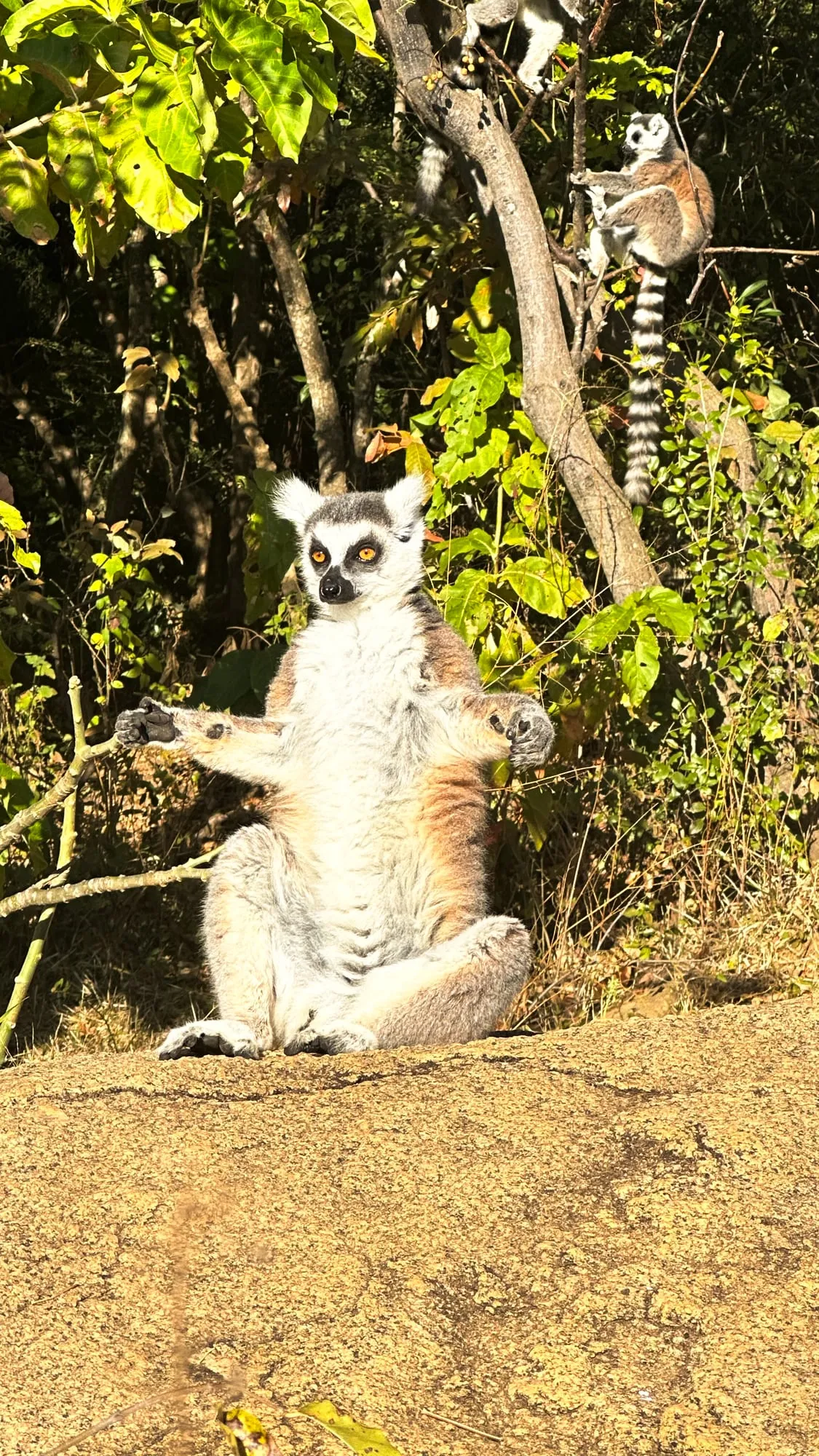
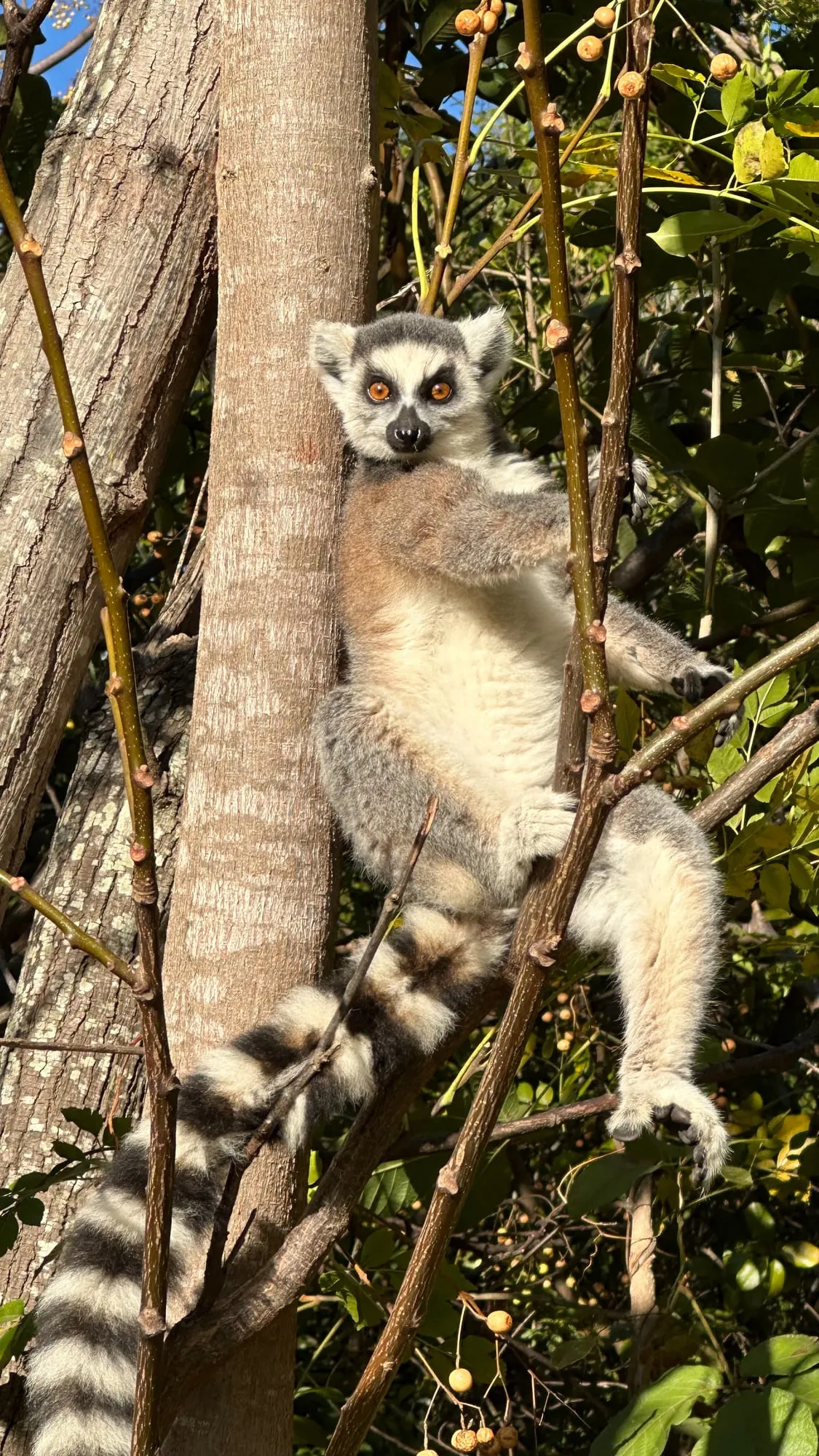
We set off early in the morning (7:00) toward Ranohira. After half an hour’s drive we reached Anja, a community reserve for the conservation of ring-tailed lemurs (King Julien). Right at the entrance we saw a huge family of lemurs – it was gorgeous. We continued on a short trail in the reserve to a viewpoint and an explanation. After we finished our loop of the reserve, we got back on the road.
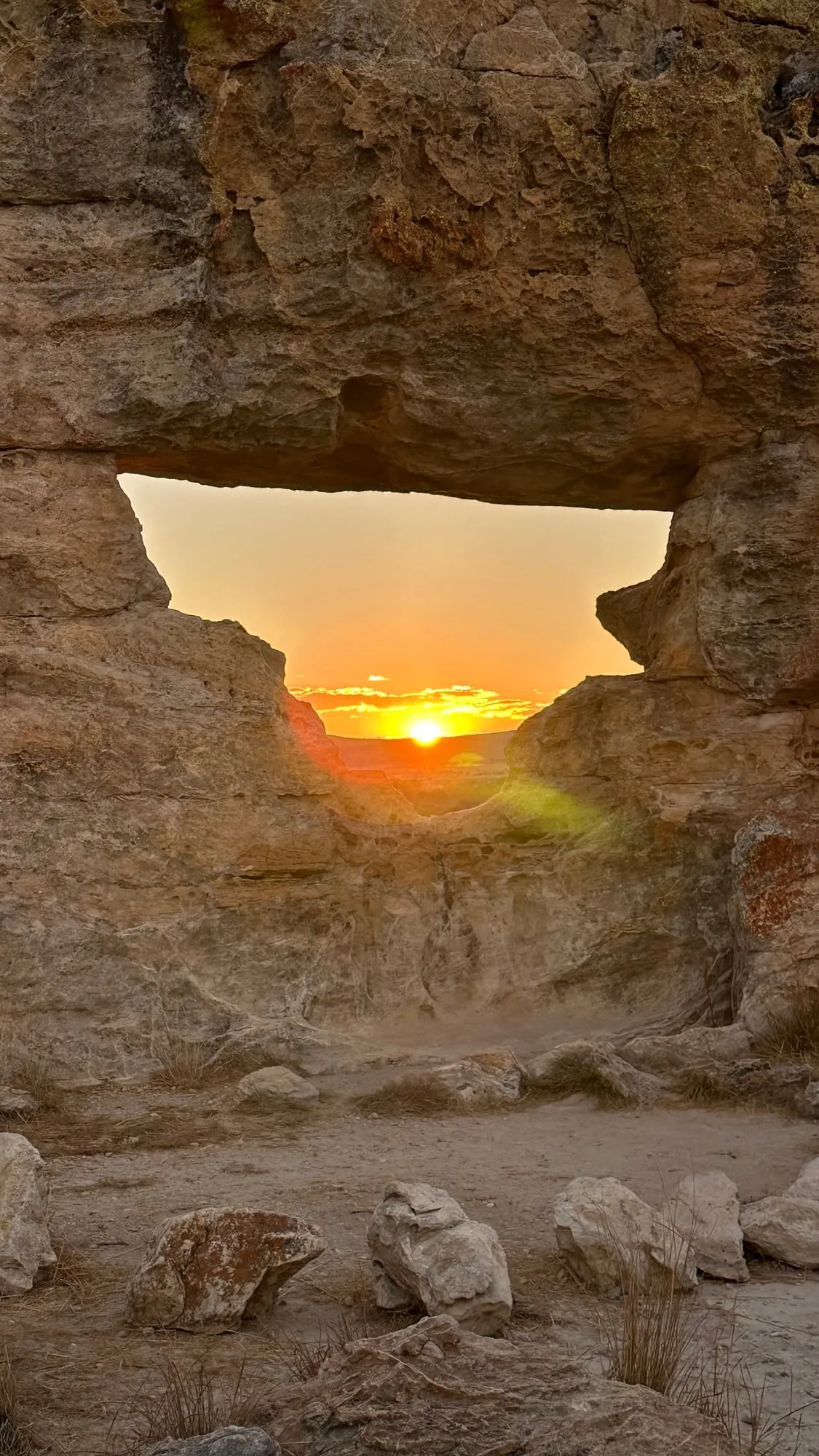
Further along we stopped for a short break near a local village, decided to take a walk through it, and it turned out to be one of the best visits of the trip. We handed out notebooks and pens to the kids, some candy and other things we had with us. We saw village life – fascinating. The kids were super sweet and curious, followed us wherever we went and introduced us to every animal in the village (goats, cats, dogs, pigs, you name it). We continued driving and reached Ranohira around 16:30. When we got there, we decided to go see the sunset at the Isalo Window – very beautiful, but packed with people who’d come to take photos.
Hotel: Satrana Lodge
Day 16: Isalo
We drove to Isalo National Park at around 7 in the morning. We picked up the local guide, our guide paid the park entrance fee, and at around 8 we started the trail. There are several options for a one-day trip in the park, and they all include at least one of two main trails. I’ve given them highly original names here, for convenience:
-
The one-pool trail (an easy walk, but unshaded; at the end you reach a stunning pool)
-
The two-pools trail (a walk inside a canyon, slightly more challenging; at the end you reach two pools that are just as stunning)
Among the options, you can choose to do one of the trails, or both with a drive between them, or both without a drive between them (walking instead). (You can play around with the drive in the middle because the first trail can be walked out to the pool and then back the same way to the car (which would then require a drive to the canyon section), or, instead of returning to the car the same way, you can continue on foot to the picnic area and from there walk on to the second section.)
We decided to do the long route (both parts, with a walk between them) – something like 7 hours, including lunch in the middle.
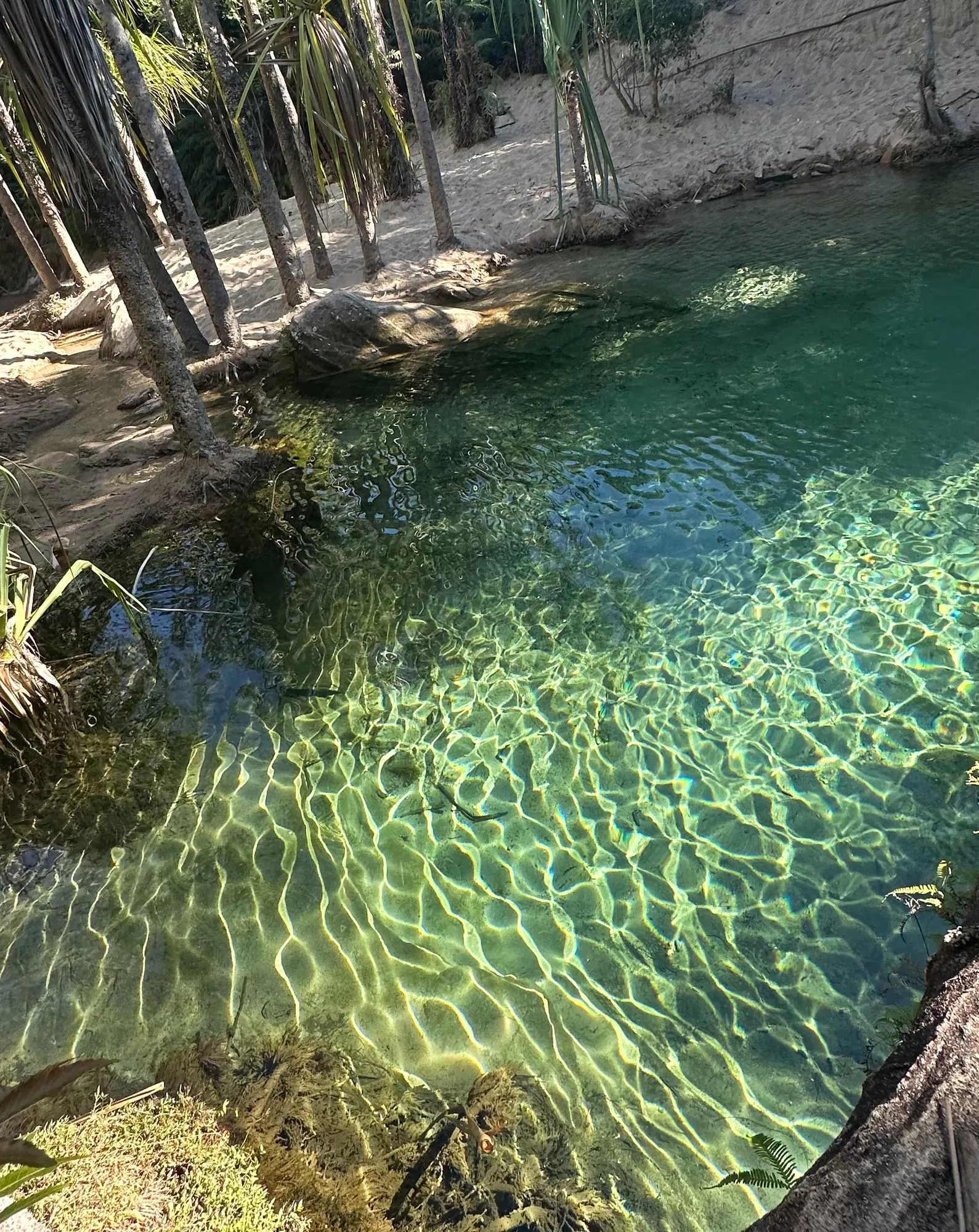
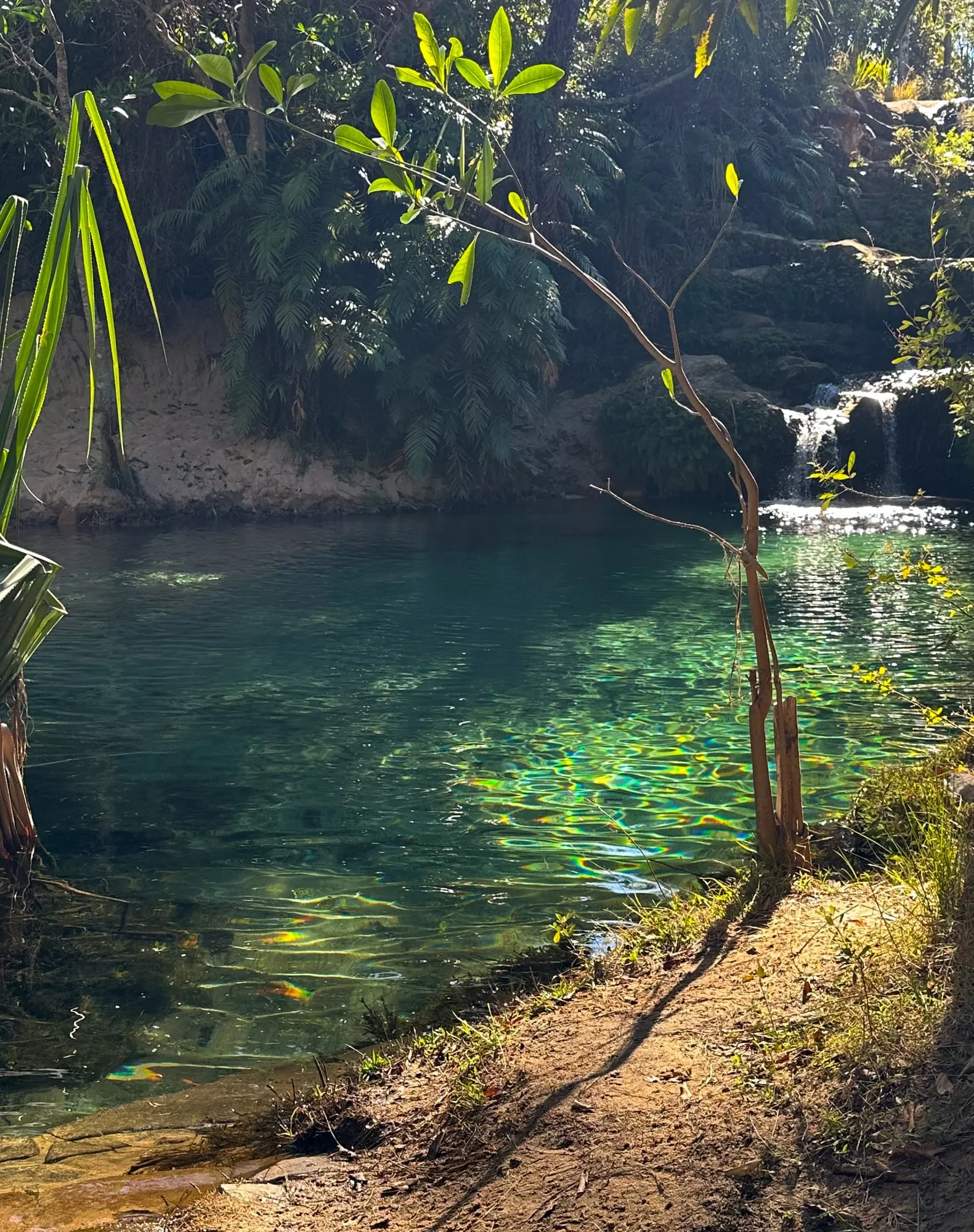
In the first part (the one-pool trail) you walk 3 km to a stunning pool that looks like an oasis / a beach in the middle of the rocks. Then another 4 km to the lunch area. The walk is relatively easy, unshaded in the part after the pool, but if you set out early the sun doesn’t bother you much. We had lunch and then decided to continue to the second part (the two-pools trail): a 45-minute walk through the canyon to two pools that are no less beautiful than the first. We went for a swim in one of the pools – fun, and really cold. To finish, another walk of about an hour back to the car.
The entire second part is inside a canyon that’s completely shaded and even cool, so I definitely recommend doing this part during the hot hours. Along the way we came across lemurs, birds, chameleons and more. The park itself is gorgeous, completely different from the rainforests we’d visited until then. We enjoyed it a lot.
Hotel: Satrana Lodge
Day 17: Ranohira – Ifaty
We set off toward Ifaty, and on the way passed through the sapphire town of Ilakaka. It’s a small town that 20 years ago had fewer than 50 residents. Then sapphires were discovered. Since then the town has grown, and today it has about 60,000 residents. Most of them hope to one day find a valuable stone that will change their lives and their fate. An interesting detail is that most of the sapphire mines aren’t Malagasy-owned but rather owned by Sri Lankans (there are also Swiss-owned mines, among others). The town isn’t a particularly safe place to wander around. We drove through it and also chose to pop into one of the shops for a quick look (colorLines). After that we stopped in Toliara for lunch and then drove another hour to Ifaty.
Hotel: La Bella Donna
Day 18: Ifaty
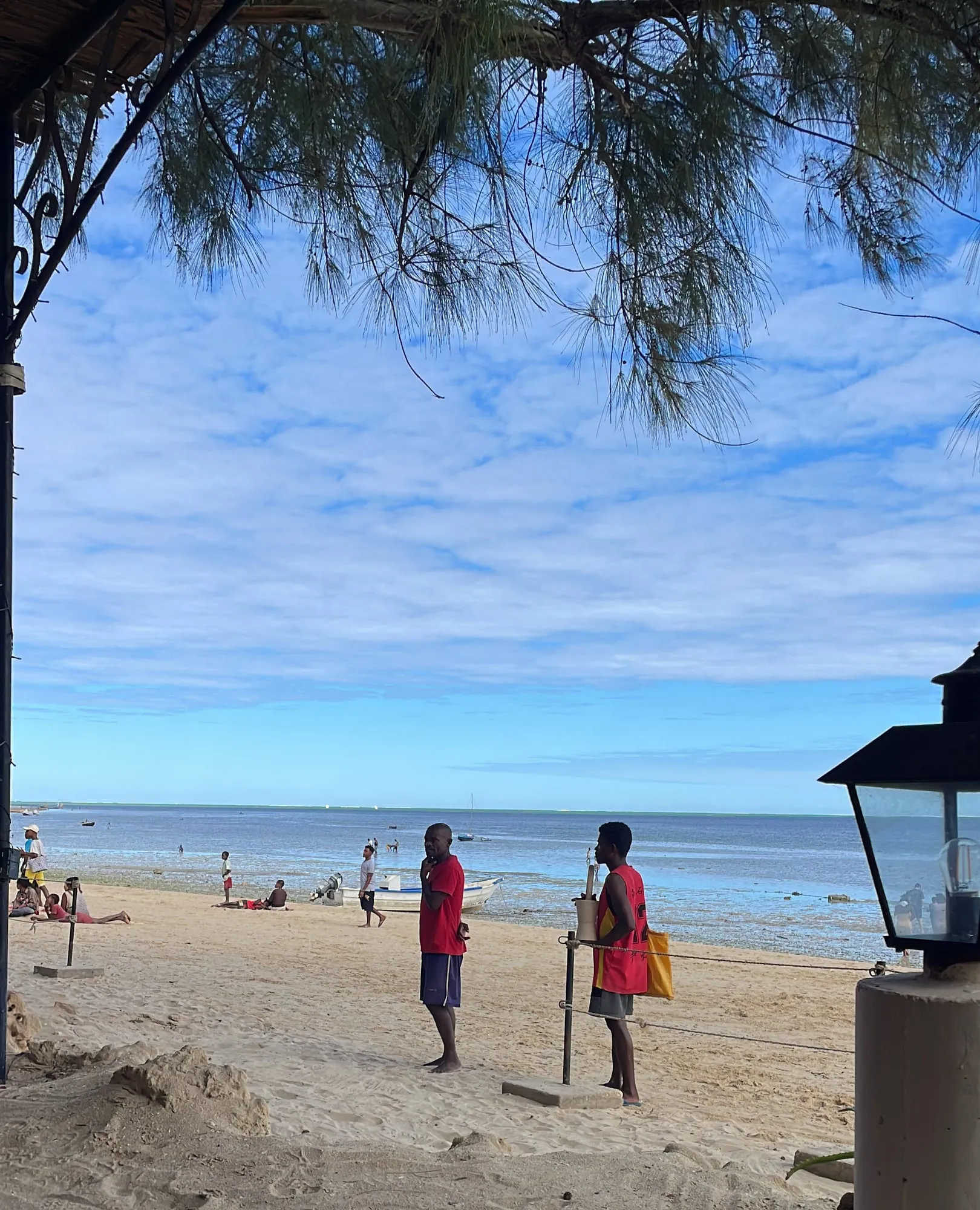
A day of rest in Ifaty. We spent most of the day resting on the hotel’s beach, and a bit of it playing with the kids on the beach.
Hotel: La Bella Donna
Day 19: Ifaty – Tana
We left Ifaty and took a flight to Tana. In Tana we once again ate at the wonderful Le Petit Verdot (we preferred not to mix things up and take unnecessary risks).
Hotel: Maison d'Hôtes Mandrosoa
Day 20: Tana – Nosy Be
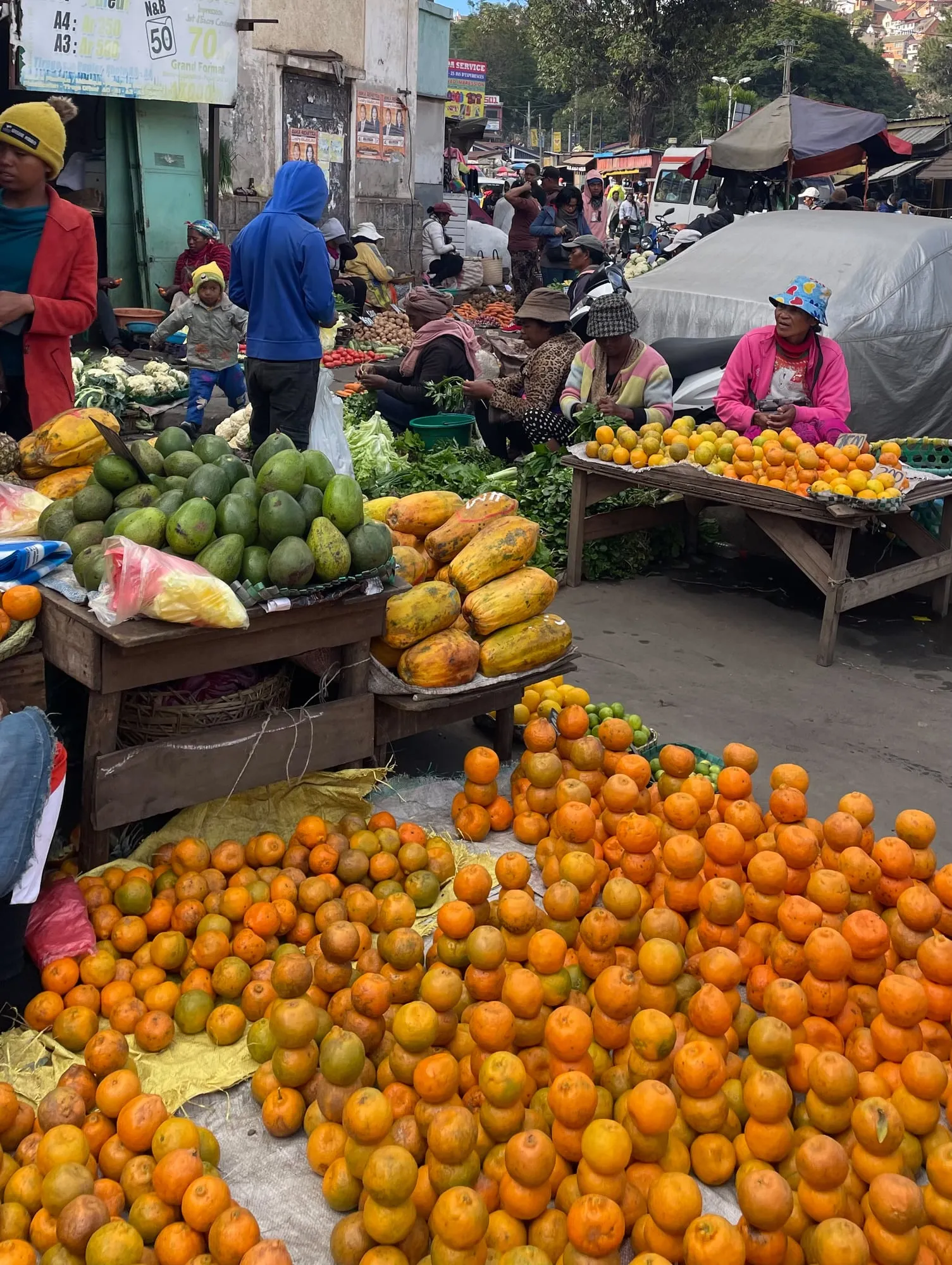
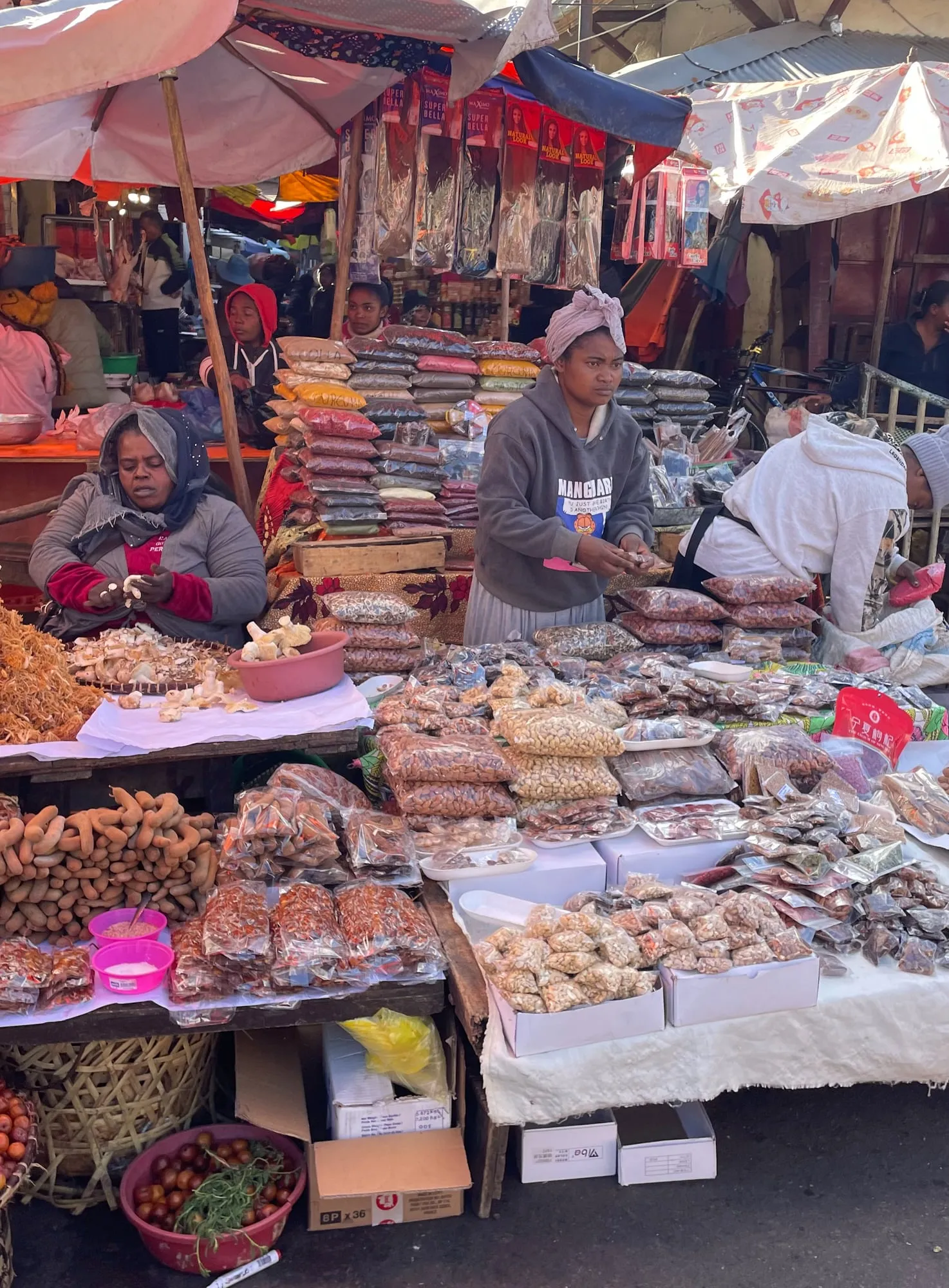
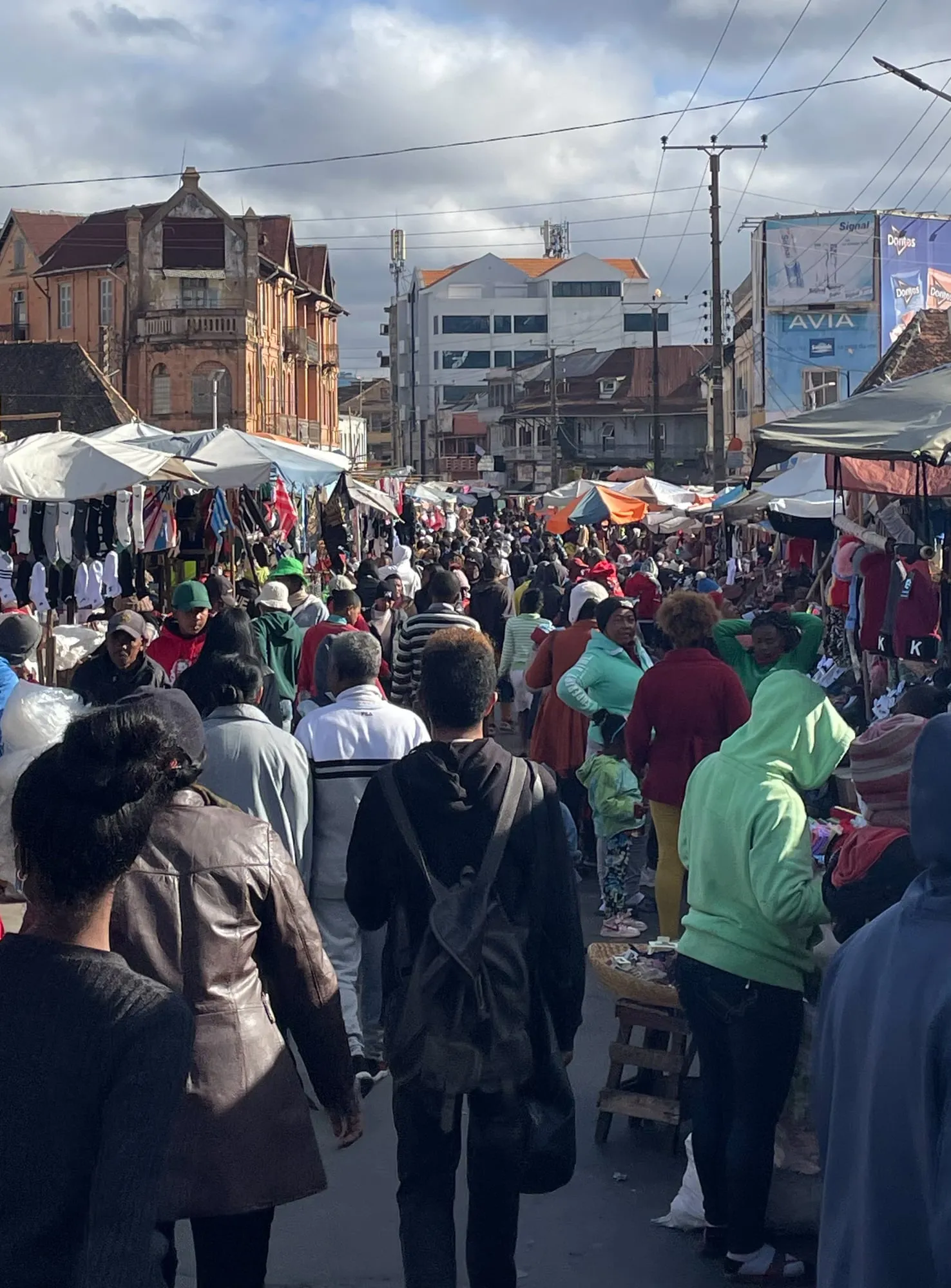
The eve of Malagasy Independence Day. We spent the morning in Tana and finally went to the Analakely market. We walked around the city center, which was full of stalls and decorations ahead of Independence Day. The market is very nice; keep in mind that it’s highly recommended not to carry valuables in this area, where there are quite a few pickpockets. At midday we boarded a flight to Nosy Be (Tana – Nosy Be).
Days 21–23: Nosy Be
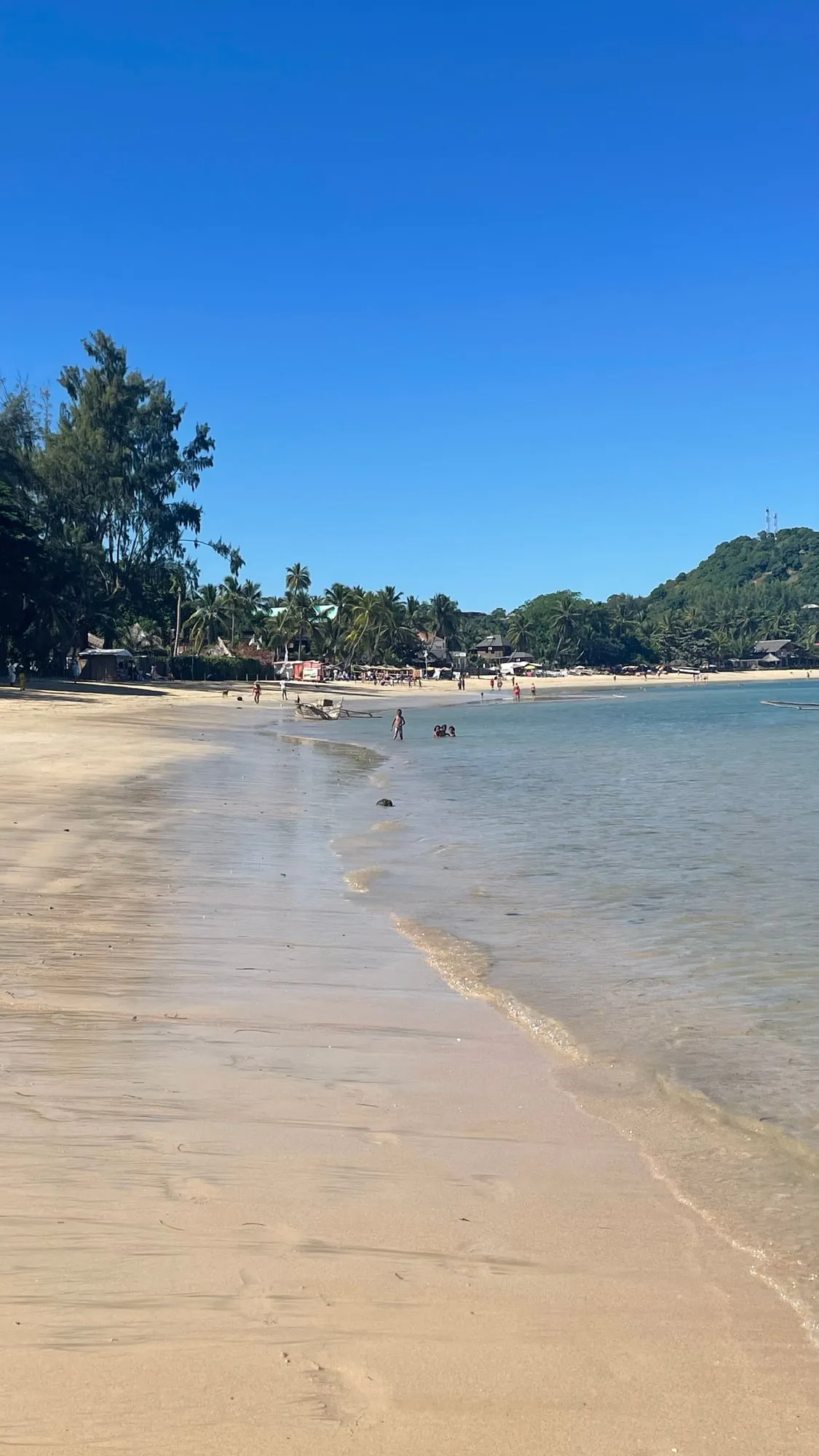
We came to Nosy Be to enjoy the amazing beaches and, above all, to rest from the journey. We decided in advance not to book or plan any plans / trips / visits during our stay on the island, and to spend our time on the beach.
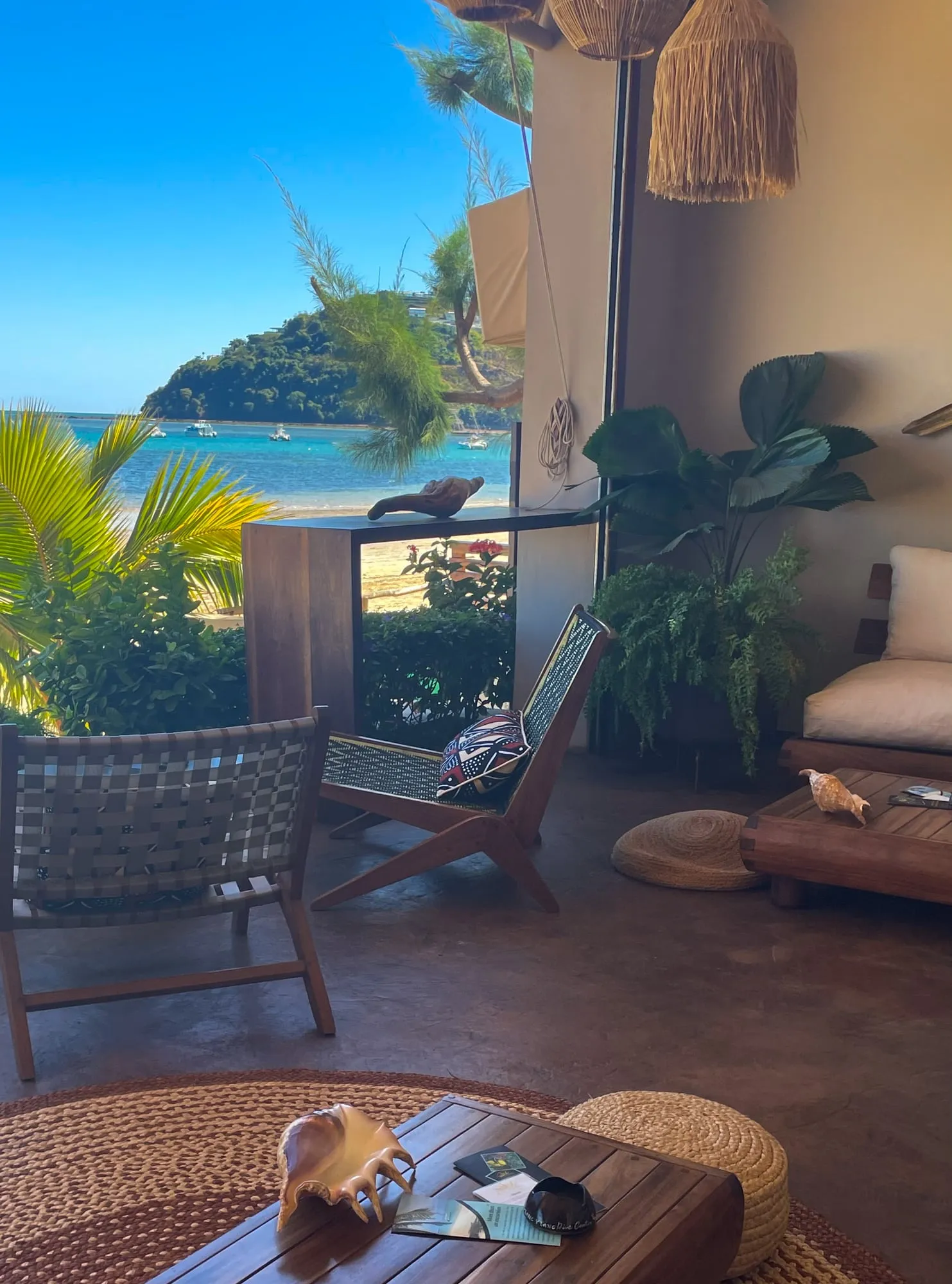
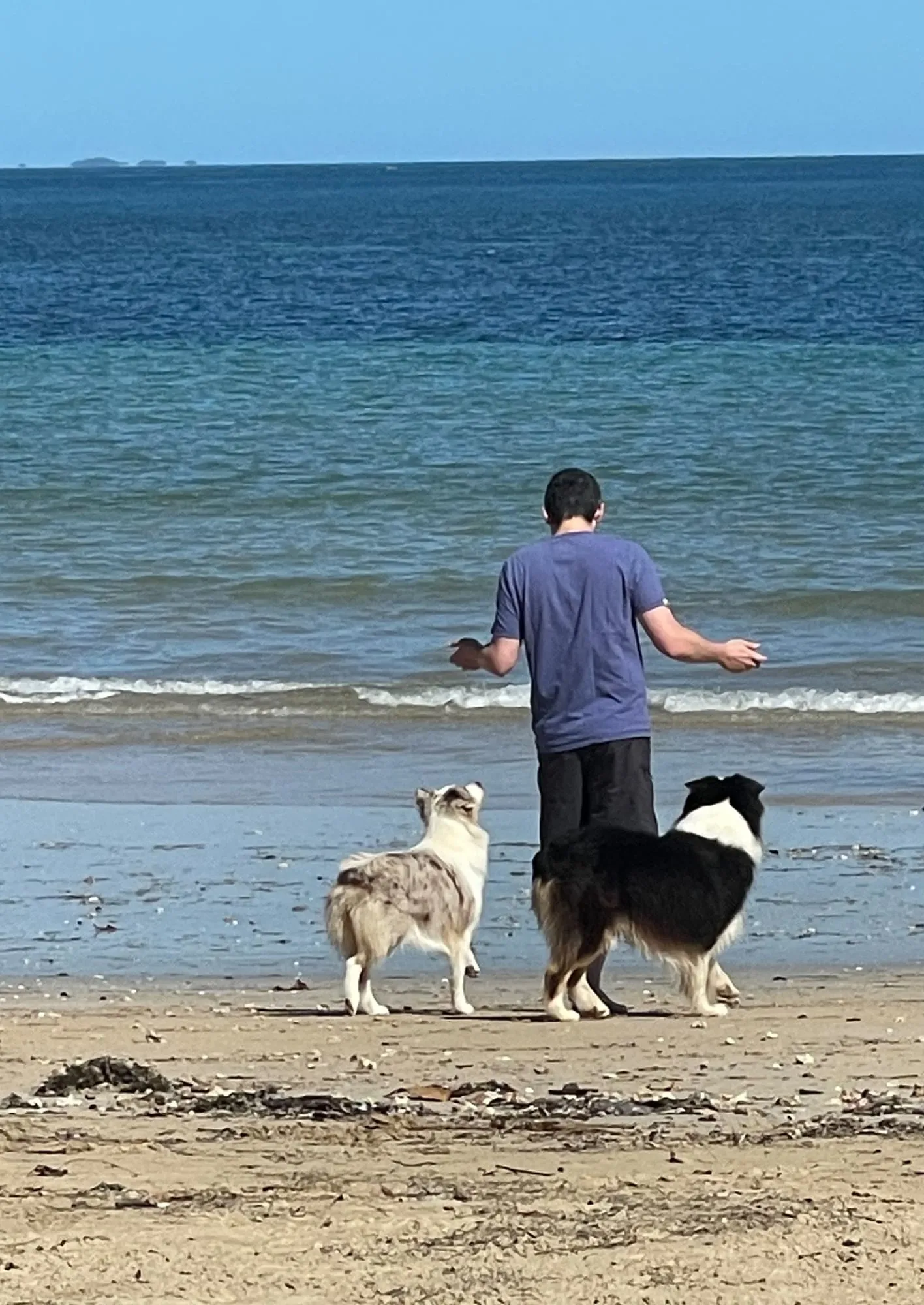
When we planned the trip we wanted to stay at Andilana Beach Hotel, one of the best hotels on the island, but because of a small booking mistake, three weeks before we arrived we realized it wasn’t going to happen. We started looking for another hotel and eventually ended up at Maison Ylang dive center. Let me pause here for a moment and say that this is the hotel we recommend most from the whole trip. We arrived at a small, family-run hotel that is nonetheless polished down to the tiniest details. The design, the cleanliness, the rooms, the bar – everything felt new and lovely; the rooms are gorgeous and especially comfortable, the hotel staff is a group of wonderful people – words fail me – and the beach, wow! The hotel is located in the southern part of the island, and we recommend it with all our hearts. And for dog lovers, two Australian Shepherds live at the hotel and will happily follow you to the sea at every opportunity.
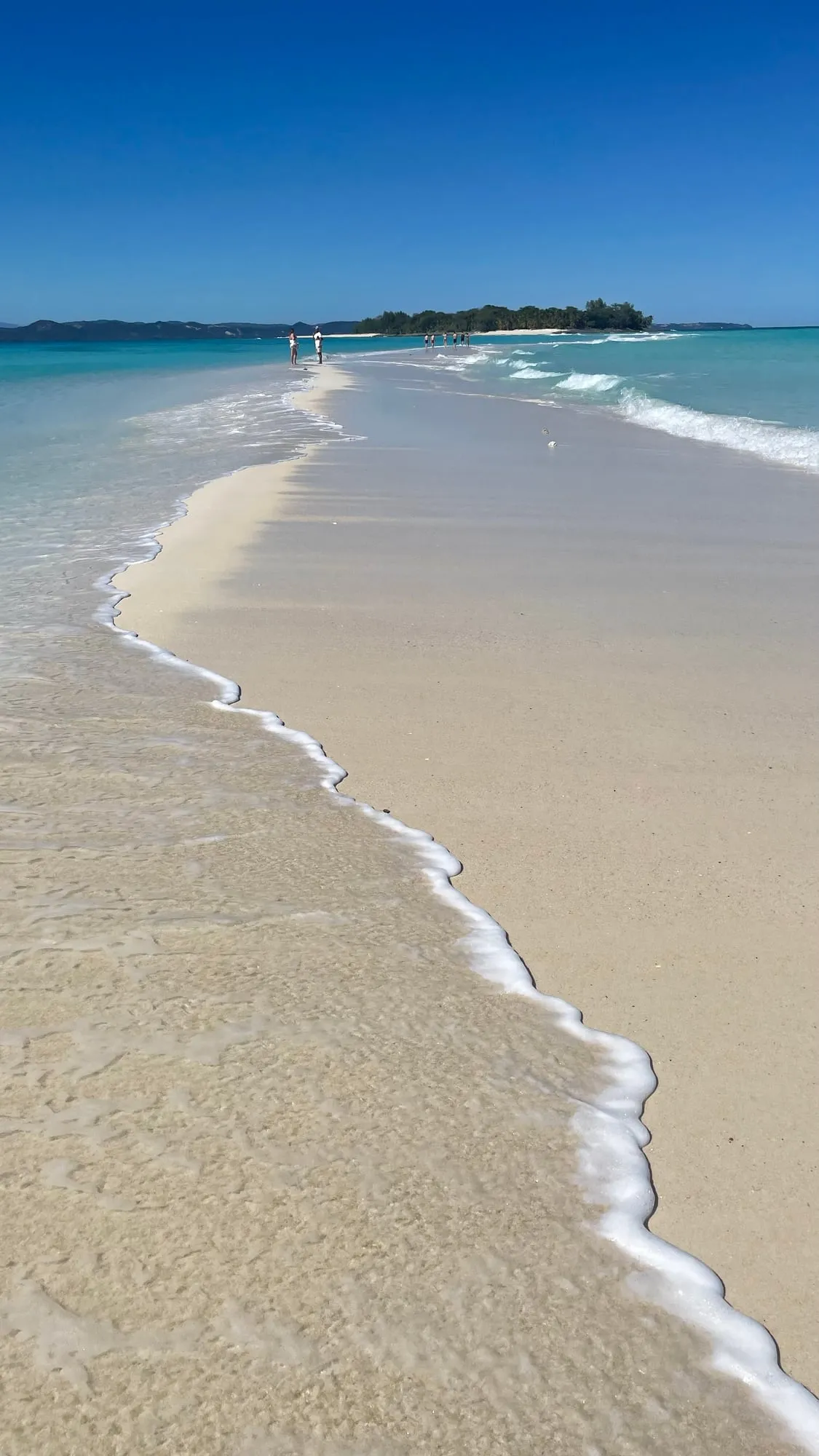
We spent most of our time on the island on the hotel’s beach, except for one day when we gave in to temptation and took a day trip to Nosy Iranja – the island with the most beautiful beach in the world. Objectively 😉